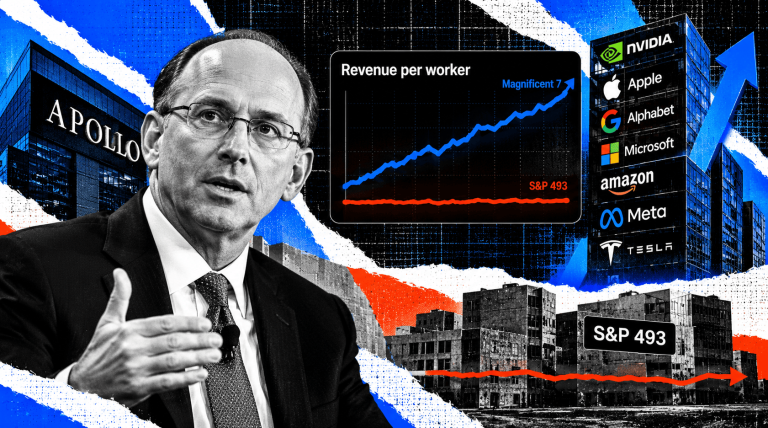

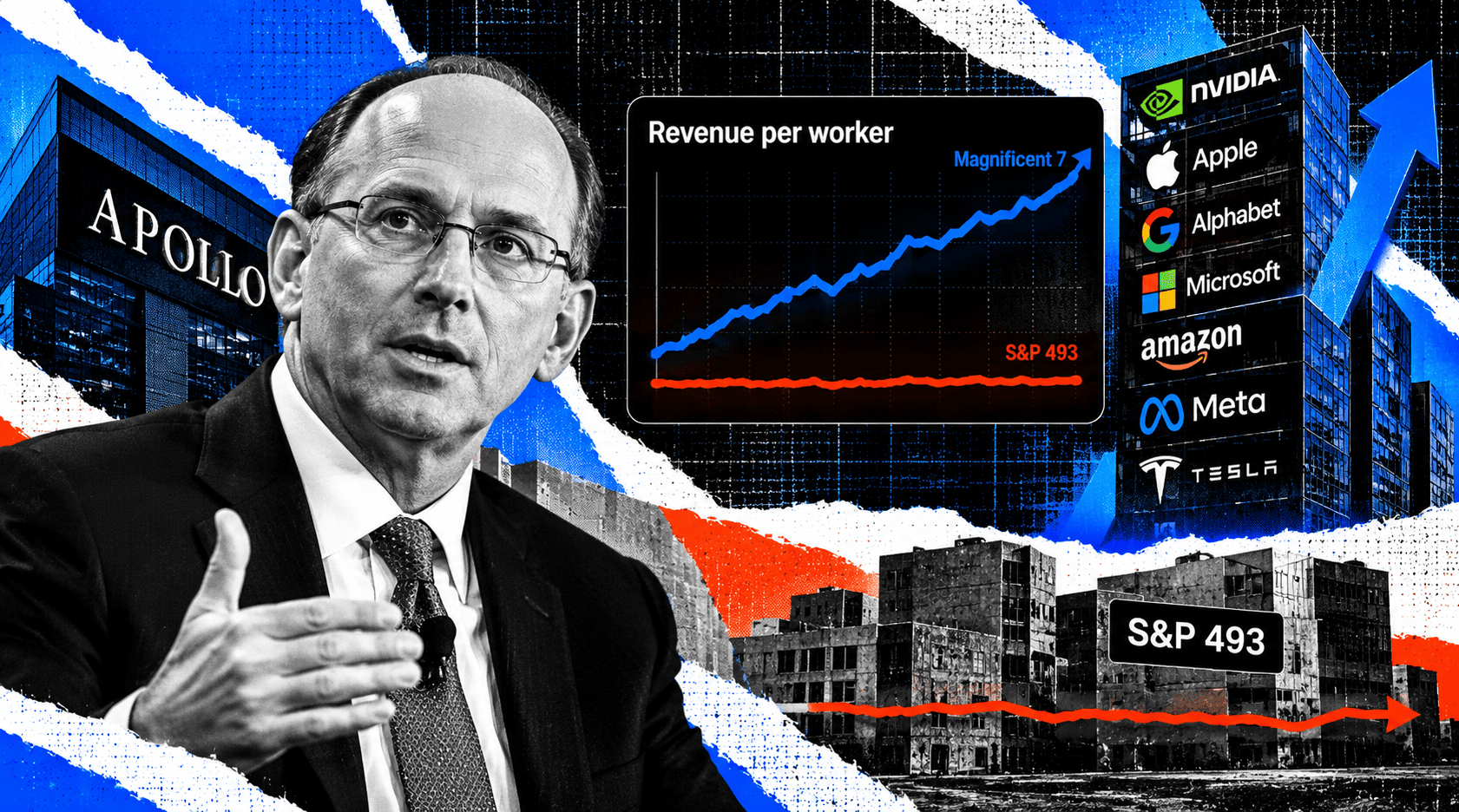
Apollo Global Management chief economist Torsten Slok wrote on October 24 that artificial intelligence “has delivered zero financial payoff to corporate America outside of tech.”
Revenue per worker is rising for the Magnificent Seven (Nvidia, Apple, Alphabet, Microsoft, Amazon, Meta, and Tesla) but is flat for the other 493 companies in the S&P 500. Profit margins show the same split. There are still no signs of AI boosting productivity growth in the San Francisco Fed’s utilization-adjusted total factor productivity series.
Slok’s bottom line: “The AI story will be decided in the S&P 493, not the Mag 7, and so far, there is no evidence that revenue growth or margins are improving outside the tech sector.”
The note arrives days after Citadel’s Ken Griffin told Bloomberg that investors are “almost certainly” in an AI bubble and that the current spending has not yet produced clear proof of durable productivity gains or pricing power. Slok’s data put a sharper number on that gap.
Token spending treated as a cost
With no impact yet on the bottom line, mainstream companies are pulling back. Slok said they are starting to view token spending “not as a source of growth but as a cost center that weighs on margins.”
Venture-backed companies continue to increase their spending on tokens. Mainstream corporate America, he argued, does not need the latest model and is unwilling to pay for it. As long as agentic AI and token spending remain confined to a small part of the economy, the macroeconomic effects of AI will be very limited.
Ramp data cited in the note shows extreme concentration. The top 10% of firms account for nearly all model serving and inference spend. Among the top 1% of AI spenders, 80.4% are venture-backed. That concentration matches the broader funding pattern: PitchBook data showed AI companies capturing more than 80% of US venture deal value through the first three quarters of 2026, with the money flowing into a smaller number of large rounds.
The infrastructure numbers are still growing
The lack of visible payoff outside tech has not slowed the build-out. TrendForce has estimated that the nine largest cloud service providers will spend $957 billion on capital expenditure in 2026, with AI systems accounting for roughly 81% of that. Morgan Stanley has projected AI-related compute investment of about $1.58 trillion in 2027 across hyperscalers and neocloud providers.
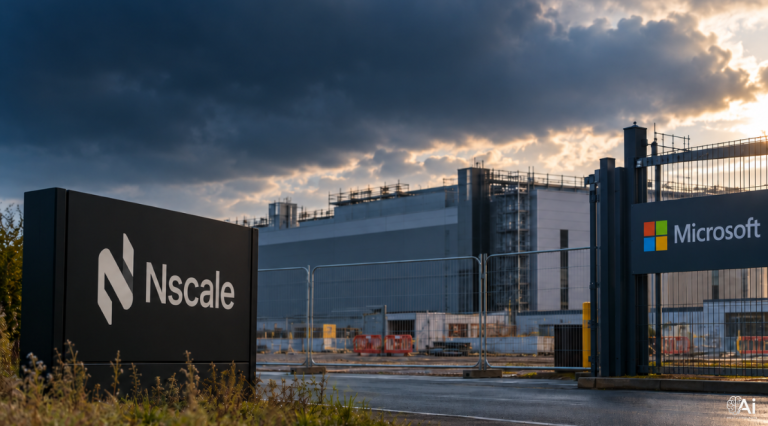
Much of the near-term demand supporting those orders is still coming from venture-backed companies rather than from a broad base of customers paying with operating cash flow. That pattern shows up in the neocloud sector: providers such as Nscale have announced more than $100 billion in signed contract value even as live capacity remains far smaller.
Gartner flags $3.5tn impairment risk
Gartner has estimated that more than $3.5 trillion of AI infrastructure spending could face impairment risk by 2030 if AI-related revenue fails to justify the outlay. In one scenario, data center owners would need roughly $8.5 trillion in revenue through 2030 to cover investment costs and earn a 12% return on invested capital. Gartner’s upper-bound forecast for AI revenue attributable to data centers is $3.6 trillion.
The missing evidence outside Big Tech
Slok’s charts isolate a clear divergence. The Magnificent Seven continue to show rising revenue per worker and expanding margins. The rest of the S&P 500 do not. Productivity growth across the wider economy has not yet accelerated.
That leaves the current infrastructure build-out dependent on a relatively narrow set of buyers, many of them still venture-funded. If broader corporate adoption does not translate into measurable revenue or margin improvement, the assumptions supporting large portions of planned capacity would need to be revised.
For now, the data show the financial payoff remains concentrated inside Big Tech. Whether and when that changes will determine how much of the current AI investment cycle is validated by operating results rather than by continued capital inflows.
Author: Andy Samu
See Also:
Ken Griffin Says AI Is “Almost Certainly” in a Bubble. Venture Capital Is Still Funding Most of the Spending. – MRKT3.0#
Microsoft Pulls Out of Nscale’s Loughton Site as IPO Nears – MRKT3.0