
The EU AI Act is the world’s first wide-ranging attempt to govern artificial intelligence, effective since August 2024 and with key high-risk obligations hitting in 2026. While groundbreaking for trustworthy AI, its strict compliance burdens could choke innovation, erode Europe’s competitiveness against the US and China, and jeopardise rights via overreach.
The 2025 rollout ignited fierce debate, captured sharply by xAI, Elon Musk’s company behind Grok. In a public statement, xAI said it “supports AI safety” and will comply with the safety chapter, but argued that other elements of the Act are “profoundly detrimental to innovation” and that the copyright provisions amount to regulatory overreach.
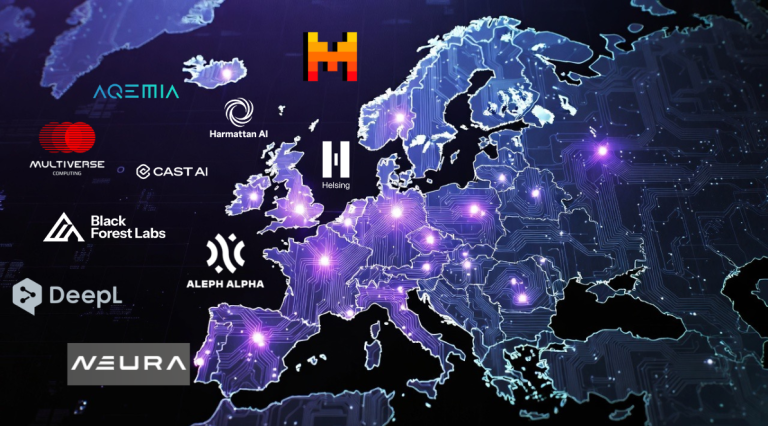
In 2026, despite the pressures, Europe refuses to stand still. Rising innovators such as Mistral AI’s ‘Le Chat’ (the multilingual speed leader), Euria (Infomaniak’s sovereign, privacy-shielded AI), and Helsing (Munich’s defense AI trailblazer) are charging ahead. Yet the continent grapples with a high-stakes balancing act: safeguarding fundamental rights in surveillance and policing while fending off US and Chinese AI dominance.
This article explores the core of the EU AI Act, what its key provisions and risk-based framework actually mean, and why it matters. Can this groundbreaking regulation foster trustworthy AI that safeguards society and drives real progress, or will its rules create barriers that slow Europe’s next wave of innovation?
The EU AI Act: A Risk-Based Framework for Trustworthy AI
The EU AI Act is the world’s first wide-ranging law dedicated to governing AI. Adopted as Regulation (EU) 2024/1689, it took effect on 1 August 2024.
It uses a risk-based system to regulate AI: the greater the potential danger to people’s health, safety, or core rights (such as privacy and protection from discrimination), the tougher the requirements become. This ensures serious risks are tightly controlled while everyday, low-impact AI can develop with minimal interference.
The four risk levels:
- Unacceptable risk — Fully prohibited (bans apply from 2 February 2025). Examples: social scoring, real-time remote biometric identification in public spaces (very narrow exceptions), manipulative subliminal techniques causing serious harm, emotion recognition in workplaces or education, untargeted facial image scraping.
- High-risk — Heavy obligations (most start 2 August 2026). Applies to AI in areas like biometrics, hiring and employment, education, credit scoring, critical infrastructure, law enforcement, migration, and justice. Key requirements: risk management, unbiased datasets, human oversight, technical documentation, conformity checks, and EU database registration.
- Limited/transparency risk — Basic transparency rules (from 2 August 2026). Examples: notify users about chatbots, clearly label deepfakes or AI-generated content, disclose emotion recognition systems.
- Minimal risk — Most common everyday AI (spam filters, gaming AI, simple recommendations). No compulsory rules, only optional good-practice guidelines.
This framework protects against major harms while supporting responsible innovation and Europe’s place in the global AI race.
Why Europe Needs to Regulate AI: Balancing Rights, Safety, and Global Competitiveness
Many believe the EU’s AI Act is essential for Europe. As AI integrates into healthcare, finance, transportation, employment, and public services, unregulated deployment risks deepening inequalities, invading privacy, and enabling discrimination.
High-profile incidents such as the Pegasus spyware scandal, the DeepSeek AI ban in several EU countries, and Clearview AI’s repeated GDPR fines for illegal facial data scraping highlight the real dangers of unchecked AI and surveillance technologies. Collectively, they demonstrate how public trust has been eroded, fundamental rights violated, and regulatory gaps exposed, underscoring the need for stronger governance.
The EU AI Act was created to address these threats. It works by setting clear safeguards, building public confidence in “trustworthy” AI, similar to how GDPR created a global privacy benchmark. It promotes responsible innovation while protecting rights in sensitive areas like policing and surveillance.
A Bloomberg analyses suggested the Act could shape worldwide standards, if implementation remains balanced and avoids excessive burdens. However, critics warn that the Act’s heavier rules could leave Europe lagging further behind global frontrunners, where minimal regulation fuels faster innovation at the expense of safeguards.
What the EU AI Act Means for Businesses and Startups in 2026
The EU AI Act creates both opportunities and obligations for companies operating in or selling into Europe. Most everyday AI tools fall into the minimal-risk category (e.g., spam filters, basic recommendation engines, video game AI), facing no mandatory requirements, only voluntary best practices. This means the vast majority of small businesses and startups can continue innovating with little to no extra cost.
However, if your product qualifies as high-risk (Annex III), such as AI used in hiring, credit scoring, education admissions, biometric identification, or critical infrastructure, compliance becomes significant. From 2 August 2026 (or potentially later under the proposed Digital Omnibus delay, as of the time of writing), you must implement:
- Full risk management system
- High-quality, unbiased datasets
- Technical documentation & logging
- Human oversight mechanisms
- Conformity assessment (often third-party)
- Registration in the public EU database
General-purpose AI (GPAI) models (e.g., large language models) also carry new transparency and copyright-related duties.
Key impacts for startups and SMEs
While the EU AI Act imposes significant compliance burdens on high-risk systems, it also presents strategic considerations for startups and SMEs navigating the European market in 2026:
- Costs & time: Documentation, audits, and third-party assessments can be expensive and time-consuming — a real challenge for resource-limited teams.
- Competitive edge: Early compliance can become a selling point: “EU AI Act compliant – trustworthy & safe AI”.
- Risk of fines: Non-compliance penalties reach up to €35 million or 7% of global annual turnover.
- Market access: Non-EU companies must comply if they place AI on the EU market, creating a level playing field but also a barrier for those unprepared.
The Challenges of Regulating a Fast-Moving AI Technology
Regulating AI presents major hurdles beyond its rapid evolution, which often outpaces legislative updates (e.g., generative AI breakthroughs rendering draft rules obsolete).
Three key challenges stand out:
- Pace of technological change vs. slow standards development — Harmonised technical standards essential for high-risk compliance are delayed, making the August 2026 deadline for most high-risk rules (Annex III) impractical for many providers, especially SMEs. This creates a risk of market delays, with companies potentially prioritising non-EU regions instead.
- Enforcement difficulties and resource constraints — Heavy reliance on self-assessments for many systems, combined with limited staffing and expertise in the EU AI Office and national authorities, creates oversight gaps and uneven application across Member States.
- Perceived regulatory overreach stifling innovation — Rules on training data, GPAI obligations, and compliance costs are criticised for favouring incumbents and disadvantaging European startups. Critics warn this weakens EU competitiveness against the US and China, prompting calls for simplification through proposals like the Digital Omnibus.
These tensions underscore the core dilemma: robust safeguards are needed, but without careful calibration, they could slow Europe’s AI progress.
Navigating the Future of EU AI Regulation in 2026
The EU AI Act is the world’s first comprehensive effort to govern AI through a risk-based framework that prioritizes safety, rights, and trust. Yet its success hinges on avoiding overreach that could stifle innovation. It matters because it directly addresses real-world harms, from surveillance scandals to unchecked biases, while giving Europe a chance to lead in ethical, competitive AI development.
The question remains: will this regulation foster trustworthy progress that safeguards society, or will implementation barriers slow the next wave of European innovation? For many, 2026 high-risk milestone will be the defining test.
See Also:
How Mistral’s ‘Le Chat’ Became Europe’s AI Darling