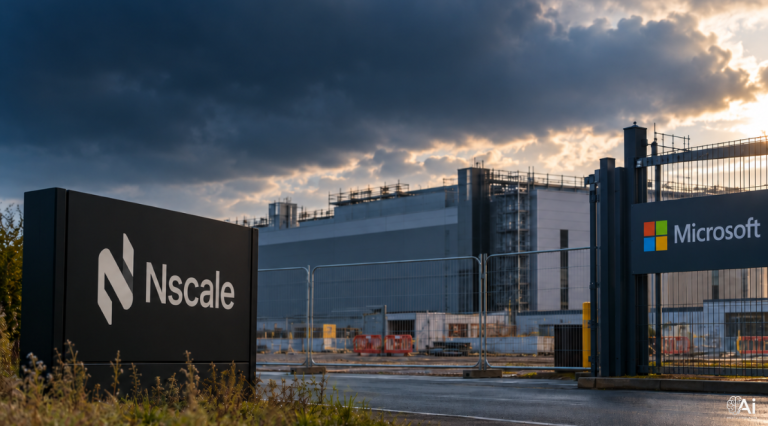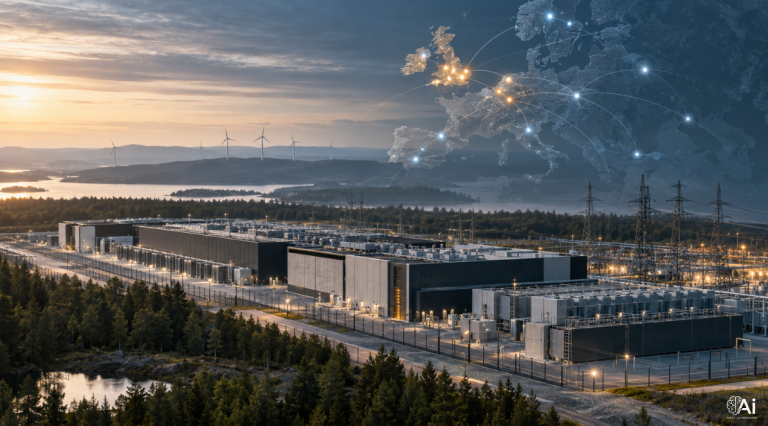


Every few weeks someone notices that the servers training chatbots drink the same water we do. On X they tag Sam Altman and ask why the North Sea sits unused. To be fair, the question isn’t completely irrational. The sea is cold, huge and already next to busy cables.
So, why don’t data centres just use seawater?
How Thirsty Is a Data Centre?
Line the national totals up and American golf courses still drink more than data centres. What makes the comparison less comforting is the direction of travel. Golf’s water use has barely moved. Data-centre demand is still climbing.
Those national totals also hide where the water comes from. Golf courses and data centres are added up across a whole country, then set against each other as if they shared one tap. They do not. A cooling tower takes water from a particular reservoir, aquifer or municipal main, the same source the town and the farms already use. A modest national figure can sit next to a local shortage.
That is the shape of the fights that follow. A Microsoft campus in North Holland used 84 million litres of drinking water in 2021. The company and the municipality had talked about 12 to 20 million.
In Aragón, Amazon asked for 48 percent more water at three sites. The local campaign against this is called “Tu Nube Seca Mi Río” which means “your cloud dries my river”.
In Wallonia this August, minister François Desquesnes refused Google a permit to pump cooling water from the Sambre during drought.
Yes, the Sea Can Cool a Data Centre
A data centre turns power into heat and (to put it simply) the cheap way to move heat is to boil water off. The process turns into an evaporative tower, where most of what you take never comes back.
Google’s rejected Wallonia plan would have returned only a quarter of the river water it pumped. Steam leaves. Minerals stay. Pipes cake. Operators start with the cleanest water the town will sell them.
A closed seawater loop works another way. Heat crosses an exchanger. The same seawater goes home. You only fight salt buildup if you evaporate.
Hailanyun, also called HiCloud, runs a hall on the seabed off Shanghai. Designers say more than 95 percent of the electricity comes from the wind farm next door, and the site takes no fresh water.
Microsoft got there first as a test. Project Natick sealed servers in a cylinder off Orkney and ran seawater past them for two years. When the hull came up it was wearing barnacles. Six of 855 underwater servers failed. On land, eight of 135 failed.
This led Microsoft to park the idea. Noelle Walsh, who runs cloud operations, told Data Center Dynamics: “I’m not building subsea data centers anywhere in the world.”
Other pilots exist as well as this.
Nautilus ran servers on a barge at Stockton and borrowed river water for seconds at a time. Digital Realty cools Marseille off a closed water loop. Denv-R floated a small prototype on the Loire. Google’s Hamina site in Finland has used Baltic seawater since it converted an old paper mill. Samsung Heavy Industries is aiming at a 50 MW floating hall in 2028.
The pilots do clearly work, it’s just almost nobody has copied them at scale.
Why Tap Water Keeps Winning
Salt eats ordinary steel and copper and grows slime in the pipes, so a seawater plant cannot use the same kit as a shed. Hamina could only take Baltic water because heat crosses titanium plates and the seawater stays off the server loop; the intake also needs marine coatings and people who have worked on ships.
Town water arrives in a pipe the utility already owns. Next to land, power and racks, that bill is small, which is why the evaporative tower is still a capex choice. Natick showed a reliability gain. The build cost still preferred the shed.
What the Sea Does Not Fix
AI still needs megawatts and a connection date and the sea does not sell those (yet).
Most jobs also sit inland. Frankfurt, London and Paris still hold the European cluster because that is where the fibre and the customers are. We mapped that shift when the siting fight moved north and south. A coastal data centre can save water and add a longer grid wait.
Europe adds another brake as warm discharge complicates things further. Google’s rejected Sambre plan would have sent water back at 30°C. Marine licences and thermal limits take years and many coastal towns would dislike a humming plant for the same reasons inland towns do.
And so, it is clear that whilst seawater could spare the tap, it still brings salt, slime, specialist kit and a marine permit, and it still does not sell megawatts or a place on the grid.
Author: Grace Sharp