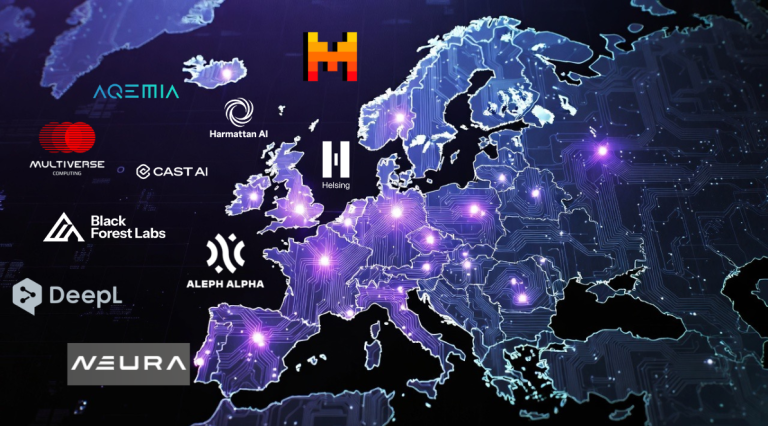

Europe’s push for technological independence is no longer just talk. In 2025, Ursula von der Leyen doubled down on her “drone wall” vision to counter hybrid threats, spotlighting homegrown AI defense as the ultimate deterrent.
Enter Helsing AI: launched in Munich in 2021, this AI defense leader has rocketed to prominence, redefining warfare with smart tech. Echoing Mistral’s Le Chat in accessible AI and Euria’s independent cloud model, Helsing delivers cutting-edge defense solutions exclusively to democracies.
But every rise comes with turbulence. A recent Bloomberg article revealed Ukraine pausing new HX-2 drone orders due to frontline issues, including launch failures, incomplete AI integration, and jamming vulnerability. Critics across X are slamming it as a “bubble-bursting” moment, questioning if Helsing’s hype matches the heat of real combat.
Yet, Helsing’s influence as an AI defense powerhouse has been persistent. Skyrocketing to a sweet €12 billion valuation after raising over €1.5 billion (including Spotify’s Daniel Ek-led €600M round in 2025), it’s primed for 2026 dominance.
Europe’s days of sitting on the sidelines are over. But can Helsing crush these setbacks to lead as the ethical AI force reshaping modern warfare?
Helsing’s Tech Arsenal: Redefining the Battlefield
From humble AI software roots, Helsing has evolved into a full-spectrum defense innovator. Its Altra platform crunches sensor and drone data in real-time, spitting out pinpoint intel for coordinated strikes. In Ukraine, it’s nailed Russian targets from 75 km out, with constant tweaks based on front-line feedback.
On the hardware side, the HX-2 kamikaze drone is software-defined, electrically powered, jamming-resistant. Paired with Altra and designed to swarm operations under human oversight, forms the backbone of Helsing’s interconnected “system of systems.”
The company’s most ambitious project is the CA-1 Europa uncrewed combat aerial vehicle. Powered by the Centaur AI agent, it is designed to match or exceed human performance in air combat, with first flight targeted for 2027. Recent Saab collaboration tests on Gripen jets demonstrated Centaur’s capability in beyond-visual-range engagements.
Key partnerships accelerate development: Saab for Eurofighter and Gripen AI upgrades, Mistral AI for specialized defense models, and the acquisition of Blue Ocean for underwater drone capabilities.
At a glance:
- Real-time AI analysis outperforming conventional methods
- Strict human-in-the-loop for ethical decision-making
- Rapid iteration driven by Ukraine field experience
Through agile software, targeted hardware, and strategic alliances, Helsing is laying the groundwork for Europe’s sovereign, next-generation defense capability.
The Brains Behind Helsing’s Sovereign AI Push
Helsing sprang to life in March 2021, courtesy of three powerhouses blending gaming, policy, and AI expertise.
- Torsten Reil (Co-CEO): Oxford PhD grad and gaming entrepreneur (sold NaturalMotion to Zynga for $527M in 2014). He drives Helsing’s innovation and champions sovereign AI.
- Gundbert Scherf (Co-CEO): Free University of Berlin grad and former McKinsey partner/German defense advisor, Scherf focuses on strategic sovereignty and partnerships. He sees Europe at a pivotal moment for defense tech innovation.
- Niklas Köhler (President & Chief Product Officer): LMU Munich physics PhD with Nature publications, Köhler oversees product development, pushing for scalable AI systems.
These visionaries have vaulted Helsing to Europe’s top-valued defense tech firm, all while advocating ethical, homegrown AI in a tense world. As the founders jointly stated: “European security is at a crossroads and Helsing will play a significant role in giving democratic societies the ability to deter and defend.”
Hurdles on Helsing’s Horizon
No innovator escapes scrutiny, and Helsing is no exception. Tech hurdles top the list: recent Ukraine tests exposed HX-2 drone glitches, from launch failures to jamming issues. This has reportedly prompted order pauses and questions about readiness. Co-CEO Torsten Reil has acknowledged a potential defense spending bubble in Europe, warning of overinflated valuations amid hype.
Helsing pushed back swiftly in its January 19 statement, rejecting Bloomberg’s claims as misleading. It highlighted that “HX-2 has consistently scored hit rates very close to or of 100% during military tests in Germany, the UK, and Kenya“, while noting ongoing deliveries of several hundred drones per month and concrete orders from multiple Ukrainian units. “We welcome scrutiny,” the statement added, “but we cannot tolerate misleading reporting on our company and on our many employees working to keep Europe safe.“
Ethical debates swirl too. Critics fear Helsing’s autonomy tech edges toward “killer robots,” despite pledges of human oversight and democracy-only sales. The “democracies only” policy raises eyebrows; what about allies with questionable rights records?
Regulatory pressures add another layer. The EU AI Act, kicking in August 2026, spares pure military AI like Altra and HX-2. But dual-use components might trigger high-risk rules, demanding audits and transparency that could hinder research and development for the tech company.
Looking Ahead: Can Helsing Remake Europe’s Defense?
Helsing’s trajectory looks promising amid Europe’s defense tech surge. With new Baltic hubs and the recent accusation of Blue ocean, a specialist maritime technology company, Helsing is expanding rapidly.
As part of a booming ecosystem, Helsing could eclipse US leaders in AI autonomy within years, bolstering NATO’s eastern flank against threats like Russia.
Predictions at a glance:
- Uncrewed fighter jets dominating skies by late 2020s
- Thousands of jobs in AI and manufacturing
- Key role in EU defense funds, driving economic revival
Reil captures the mission: “We should develop homegrown systems that we control… what degree of autonomy are we prepared to accept is something that we need to be able to control.” As AI blurs the line between human and machine, will Helsing lead the ethical revolution, or will the battlefield prove too unforgiving?
Author: Grace Sharp
See Also:
How Mistral’s ‘Le Chat’ Became Europe’s AI Darling