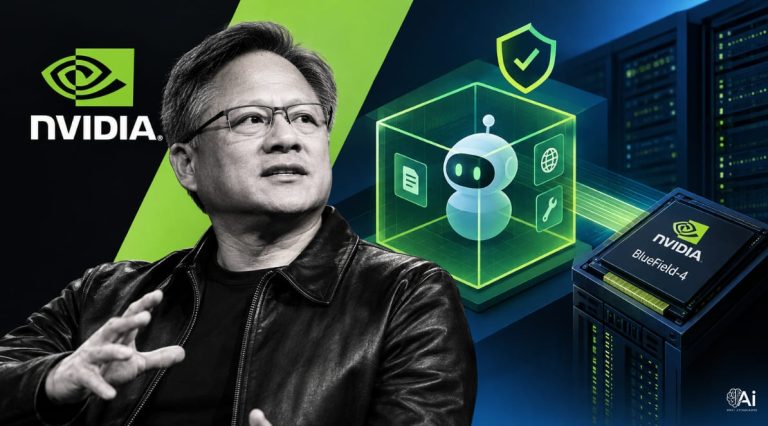

When announcing GTC 2026, Nvidia CEO Jensen Huang declared:
“AI is no longer a single breakthrough or application – it is essential infrastructure. Every company will use it. Every nation will build it.”
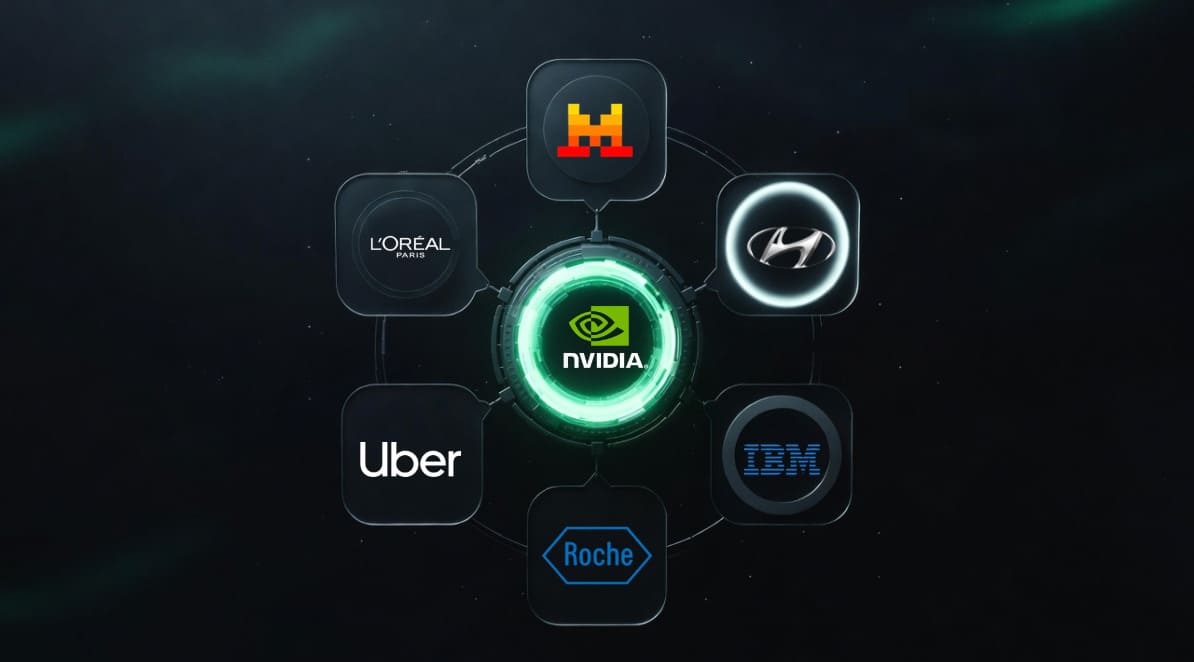
It was this sweeping vision that set the tone for the Accelerated Computing Era. Nvidia isn’t just shipping chips anymore; it’s fueling a modern day industrial revolution where accelerated computing powers sovereign models, rapid discovery in beauty and pharmaceuticals, robotaxis on real roads, enterprise AI at production scale, and physical systems in factories and beyond.
The partnerships rolling out at GTC 2026 show how every layer of the stack is advancing at once. This is the momentum turning AI dreams into real-life infrastructure.
Here’s the surge of high-impact collaborations driving it forward.
Mistral AI at GTC 2026: Sovereign Models with Mistral Forge & Nemotron
France’s AI darling, Mistral AI, stole the show at GTC 2026 with the launch of Mistral forge. This platform stands out as a major step for enterprise sovereignty as it allows companies to train powerful custom models from scratch using their own proprietary data. The approach represents a clear move away from token-based renting toward full ownership of intelligence.
It syncs perfectly with the freshly launched Nemotron Coalition. In the powerhouse alliance, Mistral teamed up with Nvidia to co-develop the base model for the upcoming Nemotron 4 family. Founding members read like an AI dream team: Black Forest Labs, Cursor, LangChain, Perplexity and more.
“Open frontier models are how AI becomes a true platform,” said Arthur Mensch, CEO of Mistral AI. “Together with NVIDIA, we will take a leading role in training and advancing frontier models at scale.”
L’Oréal Boosts Beauty Innovation via NVIDIA AI
While Mistral powers sovereign AI brains for enterprises, L’Oréal merges everyday elegance with accelerated computing. The iconic French beauty leader expanded its Nvidia collaboration at GTC 2026, spotlighting next-level predictive formulation science.
The partnership integrates Nvidia ALCHEMI into L’Oréal’s research ecosystem, creating an AI-powered engine that simulates molecular behavior at the atomic scale. This lets scientists virtually test thousands of ingredient combinations for photoprotection, skin tone, and sensorial textures.
Ultimately, the alliance will speed up discovery timelines dramatically, making the process 100x faster than traditional methods.
“By integrating NVIDIA ALCHEMI into its R&D workflows, L’Oréal can simulate ingredient performance at an atomic scale, accelerating breakthrough discoveries in formulation and delivering advanced beauty and preventive products to consumers.” Explained Azita Martin, Vice President and General Manager of AI for Retail and Consumer Packaged Goods at Nvidia.
Scaling Enterprise AI: IBM’s Expanded NVIDIA Collaboration
At GTC 2026, Nvidia also expanded its collaborations with IBM to help big companies move from small AI tests to full-scale, everyday use.
The partnership speeds up how businesses analyze huge amounts of data, makes it easier to pull useful information from documents, and supports AI setups. Key examples include faster queries on structured data for quicker insights and better tools for turning messy documents into AI-ready information.
Arvind Krishna, Chairman and CEO of IBM, emphasized the vision: “In the next wave of enterprise AI, the model layer will rely on the data, infrastructure, and orchestration layers – and on businesses that can bring all three together.”
Roche’s Massive AI Factory Launch with NVIDIA Blackwell
Pharmaceuticals leader Roche scaled its Nvidia partnership by deploying a hybrid-cloud AI factory. This expansion builds on their 2023 collaboration to accelerate drug discovery, clinical trials, diagnostics, and manufacturing. It accomplishes this through tools like Omniverse digital twins, BioNeMo foundation models, and Parabricks for genomics.
The infrastructure powers biological foundation models and breakthrough simulations, turning AI into a core capability for faster therapeutics and preventive solutions. With the addition of 2,176 new Blackwell GPUs, Roche now operates the pharmaceutical industry’s largest announced hybrid-cloud AI factory.
Aviv Regev, Executive Vice President and Head of Genentech Research and Early Development at Roche explained: “our expanded collaboration with NVIDIA and the launch of this AI factory further strengthens our leadership in AI-driven drug discovery and development.”
Robotaxis Hit the Road: Hyundai, Kia, Uber Team up with NVIDIA
Acceleration is no longer confined to the lab, it’s hitting the streets. Hyundai, Kia, and Uber are putting physical AI right into daily life.
At GTC 2026, Hyundai Motor and Kia deepened their Nvidia partnership through expanding their DRIVE Hyperion integration for next-generation autonomous systems. The work uses Nvidia simulation and training to create data-driven Level 4 capabilities.
Nvidia also grew the robotaxi-ready platform, with new partners including BYD, Nissan, Geely, and Isuzu. Uber plans to roll out Nvidia-powered robotaxis in 28 cities across four continents by 2028.
“We’ve been working on self-driving cars for a long time. The ChatGPT moment of self-driving cars has arrived,” commented Huang.
Beyond the Highlights: Adobe, Oracle, Disney & More at GTC 2026
Beyond these highlights, Nvidia’s ecosystem expanded rapidly across creative, cloud, telecom, and entertainment verticals:
- Adobe partnered strategically to advance next-generation Firefly models and agentic creative/marketing workflows. It’s powered by Nvidia’s accelerated computing for enterprise-grade precision and scale.
- Oracle deepened AI integrations on its cloud infrastructure, adding superclusters, faster vector search, and Nemotron model support for enterprise workloads.
- T-Mobile (with partners like Nokia) is integrating physical AI applications on AI-RAN-ready infrastructure, turning cell sites into edge AI platforms for robotics and smart systems.
- Disney showcased its robotics collaboration in the keynote. The event featured a lifelike, free-roaming robotic Olaf from Frozen trained in Nvidia’s Newton simulator.
GTC 2026 gave the AI community a clear glimpse of the future: a world of AI factories producing intelligence at massive scale, agentic systems tackling real-world tasks, and physical AI becoming part of everyday life. At the same time, open ecosystems are accelerating innovation and pushing boundaries faster than ever before.
Author: Grace Sharp