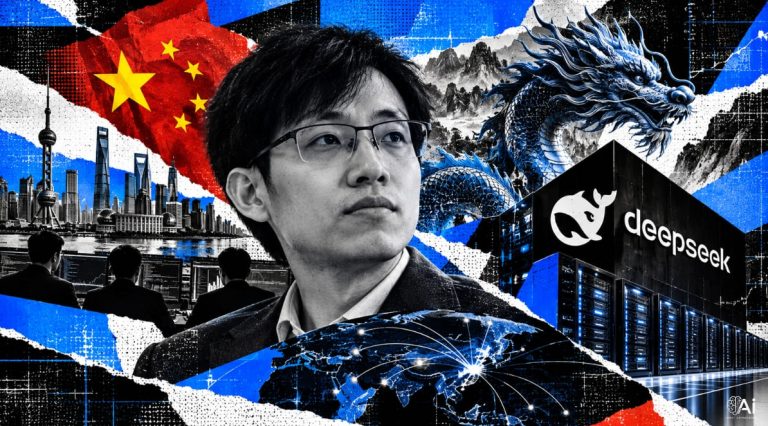

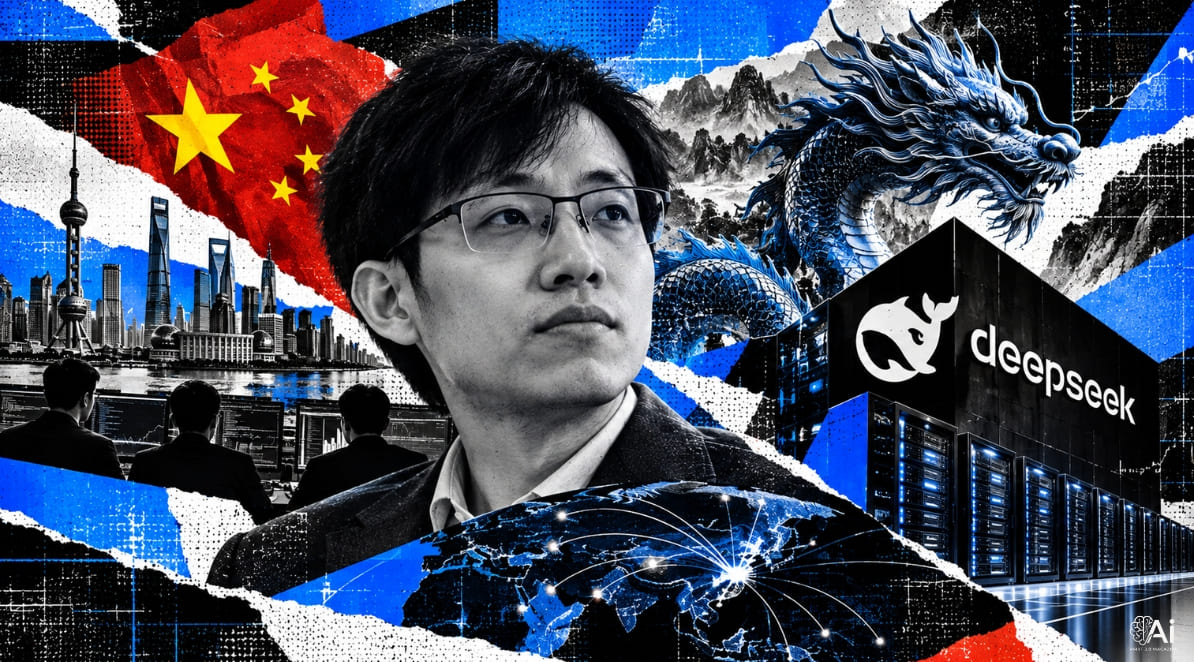
Most of the world’s AI leaders spent years inside Google, OpenAI or Meta. Liang Wenfeng spent those years running a Chinese quantitative hedge fund.
In January 2025 his lab released DeepSeek-R1, a model that matched OpenAI’s best reasoning system on hard maths and coding tests while costing a fraction as much to run, and then he open-sourced the weights. Marc Andreessen, the venture capitalist who co-founded Netscape and Andreessen Horowitz, called it “AI’s Sputnik moment.”
Liang had never worked at a Western AI lab, and he still rarely gives interviews. For a while the person who forced that rethink was almost unknown outside Chinese finance. The question is how someone with that background ended up running one of the most valuable AI companies in China, and still owning most of it.
How Did Liang Wenfeng Get Here?
The decision that set Liang down the path of creating one of China’s leading AI companies started with an opportunity he turned down.
Liang was born in 1985 in a village in Wuchuan, Guangdong. Both his parents were primary-school Chinese teachers. He entered Zhejiang University at 17, finished a bachelor’s in electronic information engineering in 2007, and a master’s in information and communication engineering in 2010. During those years Wang Tao, who later founded DJI, asked him to join as a co-founder. DJI makes the small drones that film weddings, sports and, later, war zones, and it became the company that sells most of them. Liang said no, and went into markets instead.
In 2015 he co-founded High-Flyer with two classmates from the same university. High-Flyer is a quantitative fund, meaning it uses models and data to trade rather than a person picking stocks. By 2021 it managed about $14 billion. Performance later slipped, and assets fell to around $6 billion.
In 2023 he spun the AI work out as DeepSeek and funded the early years from the fund’s profits and its existing machines. Most AI labs raise first and build second. DeepSeek grew on its own money until 2026. Three of the early High-Flyer executives, Li Huan, Zheng Dawei and Chen Zhe, still hold about 9.5% of DeepSeek between them.
In January 2025, days after R1 landed, he was one of nine people asked to speak at a closed-door symposium hosted by Premier Li Qiang on the draft Government Work Report. The previous year the same slot had gone to Baidu’s Robin Li. For a founder who rarely spoke in public, the invitation was Beijing’s way of signalling that DeepSeek already counted as strategically important.
DeepSeek Funding, Valuation and Ownership
DeepSeek did not take outside money until 2026, three years after it was founded, and the structure of that first round left Liang in control.
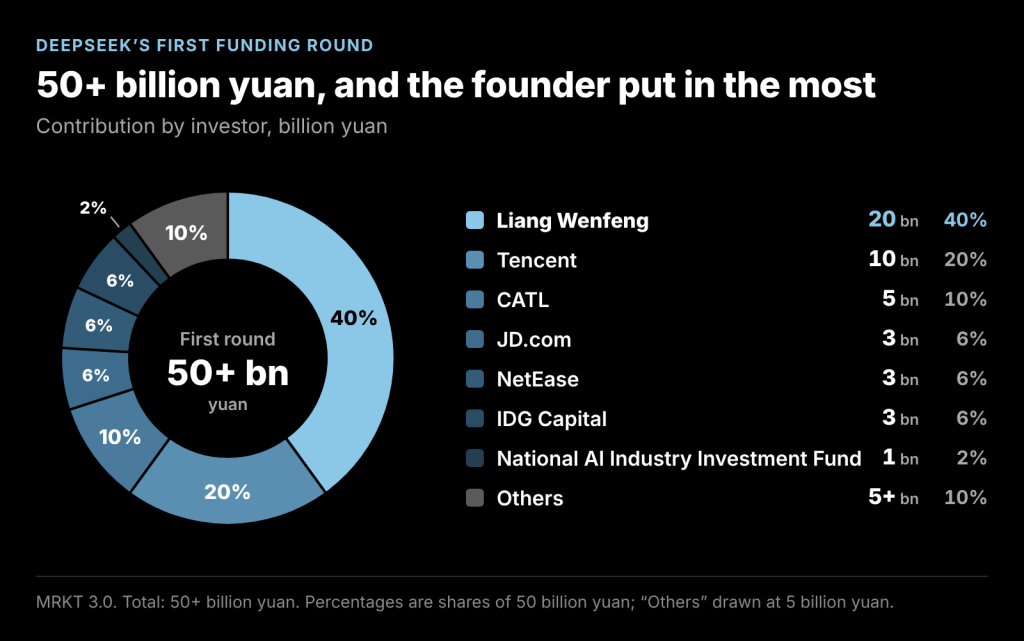
DeepSeek closed about 51 billion yuan, roughly $7.4 billion, on June 16, 2026, at a post-money valuation of roughly $50–52 billion. Liang put in 20 billion yuan of his own. Tencent put in 10 billion and CATL 5 billion. JD.com, NetEase and IDG Capital each put in about 3 billion.
| Investor | Amount (June 2026) | Voting rights |
|---|---|---|
| Liang Wenfeng | 20 billion yuan | Control |
| Tencent | 10 billion yuan | None (LP) |
| CATL | 5 billion yuan | None (LP) |
| JD.com, NetEase, IDG (each) | About 3 billion yuan | None (LP) |
| National AI Industry Investment Fund | About 1 billion yuan | Yes |
Corporate records show his direct stake at about 34%. His beneficial ownership, once the vehicles above him are traced, sits in the high 70s to mid-80s percent depending on the source. Bloomberg used about 78%. Other reconstructions put it at about 84%. Most of the external money sits in a partnership he controls, with economic exposure but no votes. A state fund is the one outside holder with governance rights. We have previously mapped the wider Chinese lab field.
A further round of at least 80 billion yuan is close to closing, ahead of a planned listing in early 2027. A raise of that size would dilute him unless he buys in again.
What Is Liang Wenfeng’s Net Worth?
Liang’s net worth is a number that moves with the valuation, and the valuation is still moving.
Forbes puts his net worth at $39.5 billion, as of July 2026. Bloomberg said it is closer to $36 billion, “making the Chinese entrepreneur the world’s richest among creators of AI models.” Both numbers are estimates. They rest on the roughly $50–52 billion valuation and on his ownership, which is not a cash number. While High-Flyer is the older part of Liang’s fortune, DeepSeek is now the larger one. Neither would be easy to sell while the company is still private.
Why Should You Care About Liang Wenfeng?
Liang open-sourced the model that matched the best closed one, and then said open source was the point.
R1 landed in January 2025. It matched OpenAI’s o1 on maths and coding benchmarks and cost a fraction as much to run. The weights were open, which is why it spread. In a closed-door investor meeting in May 2026, whose transcript later leaked, he said: “The more restrained you are, the more likely you are to achieve AGI.” He argued that open source is conviction, not a tactic, because AI may eventually take 10% of GDP and “those who take more will be beaten by those who take less.” His priority, he said, is increasing the probability of success, not maximising market share. We have tested later DeepSeek models against Qwen over here.
For Europe, the question is whether a model that can be downloaded and run locally is easier to live with than one that can be switched off from California. He still controls the company that produced it, and he still rarely speaks.
What to Watch Next
Here is what we should all be looking for in the next year:
- A further round of at least 80 billion yuan is close to closing, ahead of a planned listing in early 2027. The ownership number moves if he does not buy in, and a listing would change the control picture again.
- The next model. R1 was the moment. V4 Flash reset the cost-versus-performance comparison this year. The next release is the one that will show whether the efficiency holds.
- Europe’s choice. Whether governments and companies actually download and run the weights, or stay with the closed US models that can be switched off.
Author: Grace Sharp
See Also:
DeepSeek Explodes to $20B. China’s Big Tech Wants a Slice.
Is DeepSeek V4.1 Flash Faster Than Qwen3.8 Flash?
Chinese LLMs in 2026: The Complete Map
Frequently Asked Questions:
Liang Wenfeng is the founder and controlling shareholder of DeepSeek, the Chinese AI lab behind the open-weight models that shook the industry in 2025. He previously co-founded High-Flyer, a quantitative hedge fund, with Zhejiang University classmates and used its resources to launch DeepSeek in 2023. He rarely gives interviews and has never worked at a Western AI lab.
Estimates put Liang Wenfeng’s net worth at roughly $36–40 billion as of mid-to-late 2026. Bloomberg has cited around $36 billion; Forbes has listed about $39.5 billion. The bulk comes from his controlling stake in DeepSeek after the company’s first external funding round valued it at about $50–52 billion.
Liang holds roughly 78–84% beneficial ownership of DeepSeek and close to 100% of the voting rights. In the June 2026 round he personally put in about 20 billion yuan. Most outside investors (including Tencent and CATL) received economic exposure through a limited partnership he controls, with no voting rights or board seats. China’s National AI Industry Investment Fund is the main external holder with any governance rights.
Released in January 2025, DeepSeek-R1 matched or approached OpenAI’s o1 on hard maths and coding benchmarks while costing a fraction as much to run. DeepSeek open-sourced the weights, which is why the model spread so quickly. Marc Andreessen called the moment “AI’s Sputnik moment.”
Yes. Days after R1’s impact, he was one of nine people invited to speak at a closed-door symposium hosted by Premier Li Qiang on the draft Government Work Report. The previous year a similar slot had gone to Baidu’s Robin Li. The invitation signalled Beijing’s view of DeepSeek as strategically important.
Yes. As of October 2026 the company is close to closing a further round of at least 80 billion yuan (with some reports suggesting it could approach 100 billion), ahead of a planned listing in early 2027. Whether Liang buys into the new round will affect the ownership percentage.
DeepSeek’s open weights can be downloaded and run locally, unlike closed US models that can be switched off from California. For European governments and companies the practical question is whether they actually use the open weights or stay with the closed alternatives. Liang still controls the company that produces the models and continues to emphasise open source as a conviction rather than a short-term tactic.