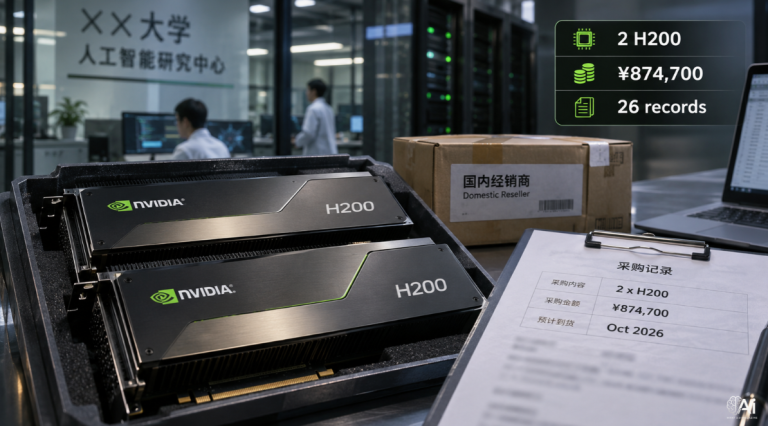

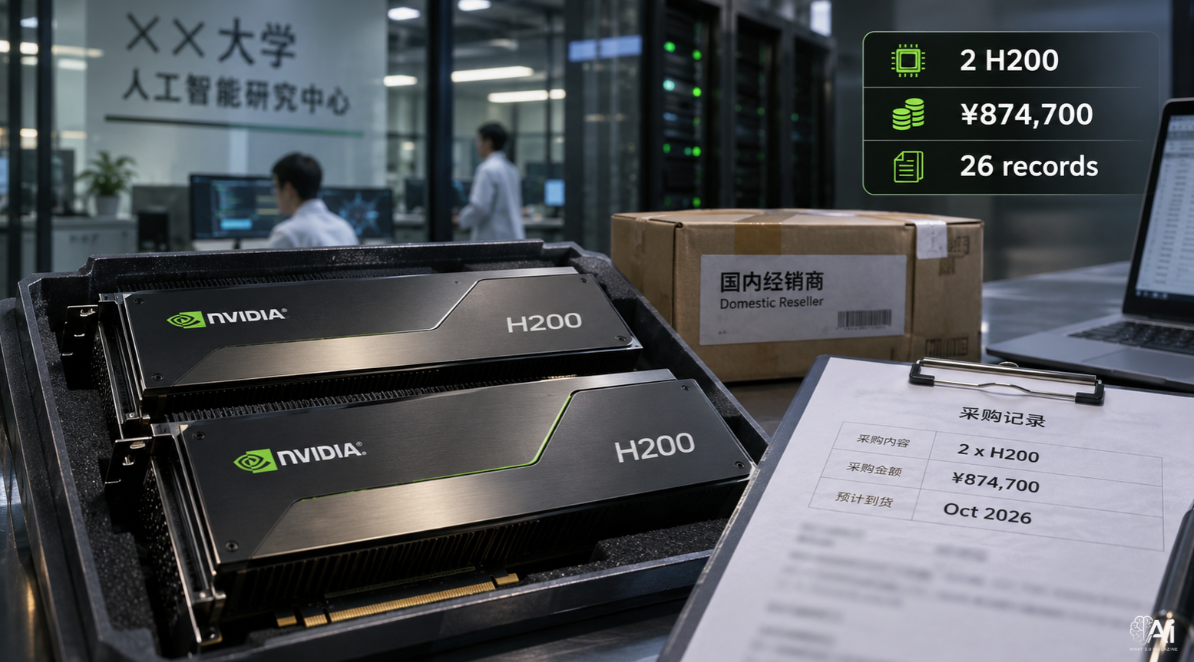
Northwestern Polytechnical University in China, linked to the People’s Liberation Army and listed on the US Entity List, bought two NVIDIA H200 chips in October for 874,700 yuan (roughly $123,000). An October 21 procurement record on the university’s website shows its management school purchased the chips from Shaanxi Bosuan Network Technology rather than from NVIDIA.
Reuters reviewed 26 procurement and corporate records from China this year and found universities and institutes buying or renting restricted NVIDIA chips from domestic suppliers. Several of those buyers had close ties to defence or military research. A Reuters report the previous week described small quantities of H200 chips reaching the mainland indirectly while Beijing withheld approval for large-scale imports.
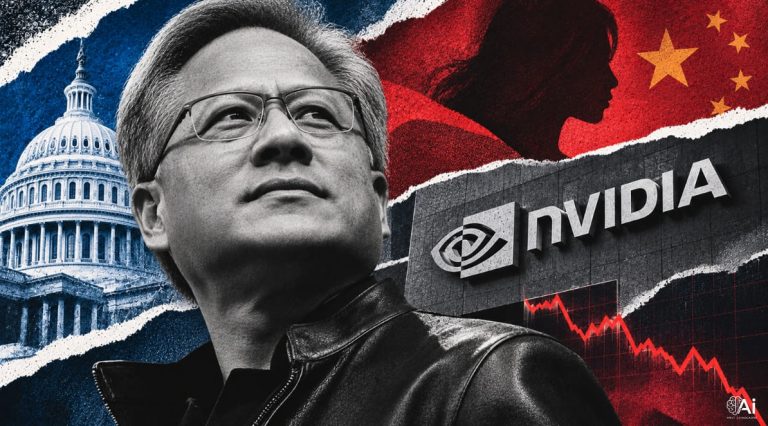
Senator Kevin Cramer, a Republican on the Senate Banking Committee, told Politico on November 10 that Jensen Huang, NVIDIA’s chief executive, should step down. “The potential for extortion is so tremendous that something as sensitive as Nvidia chips, I just think he’s got to go.”
The H200 requires a US export licence that is normally denied for Entity List institutions such as Northwestern Polytechnical. The university, NVIDIA and the Commerce Department’s Bureau of Industry and Security did not respond to Reuters’ requests for comment.
Why Is Northwestern Polytechnical University on the US Entity List?
US Commerce added Northwestern Polytechnical to the Entity List in 2001 over alleged involvement in missile proliferation and military research, then tightened the listing in 2019 to a policy of denial in most circumstances.
The Xi’an-based school researches military aircraft, missiles and satellites. It belongs to the Seven Sons of National Defense, a group of Chinese universities under US sanctions with a history of defence-related research for Beijing.
What Other NVIDIA Computing Contracts Appear for the University
In January the university’s cybersecurity school awarded two seven-month contracts, worth 441,700 yuan and 441,000 yuan, for servers containing eight H200 chips each. The contracts covered AI fine-tuning and reinforcement learning.
Procurement records show the university rented H200 and other NVIDIA capacity this year through five contracts with Chinese companies. It also rented servers with eight A100 chips and eight A800 chips. US rules bar both models from export to Chinese entities of any kind.
Another institute at the university bought computing services in April that required at least 24 A100 chips. That contract, worth 375,000 yuan, covered structural and fluid-dynamics simulations.
Which Other Chinese Universities Show Up in the Records
Shenzhen University paid 769,800 yuan in September for three H100 chips, according to the records Reuters examined. Wuhan University of Technology bought an H100 server in June and four A100 chips separately. Beihang University, another Seven Sons university, paid 489,000 yuan in April for four A800 processors.
Next Steps for Lawmakers and NVIDIA’s Board
In January the Trump administration began approving some H200 exports to China on a case-by-case basis, but Entity List restrictions remained in place.
The January licensing rules require safeguards so that blacklisted entities and military end-users cannot reach exported chips remotely. Huang argues that continued US sales to China preserve American leadership; some lawmakers say the top chips accelerate Chinese weapons and military AI.
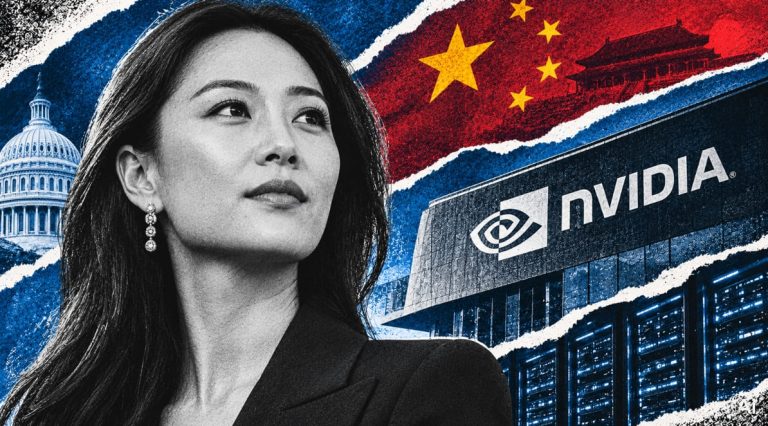
NVIDIA’s board opened an independent investigation on November 8 into whether foreign intelligence had targeted Huang. The board has said it sees no sign that national security or company secrets were compromised. We profiled the executive at the centre of that probe and examined whether the board can remove Huang. Three Republican committee chairmen requested a briefing with Huang for November 18, citing reports of his contacts with a person alleged to be a Chinese intelligence operative. The next public markers are the board’s ongoing review and whether Huang appears for that closed-door session.
Author: Grace Sharp
See Also:
Who Is Alice Huang? The Executive in the NVIDIA Affair Probe
Can NVIDIA’s Board Fire Jensen Huang?
The Chip Security Act Explained: Will US Chips Come to Europe With a Tracking Device?