
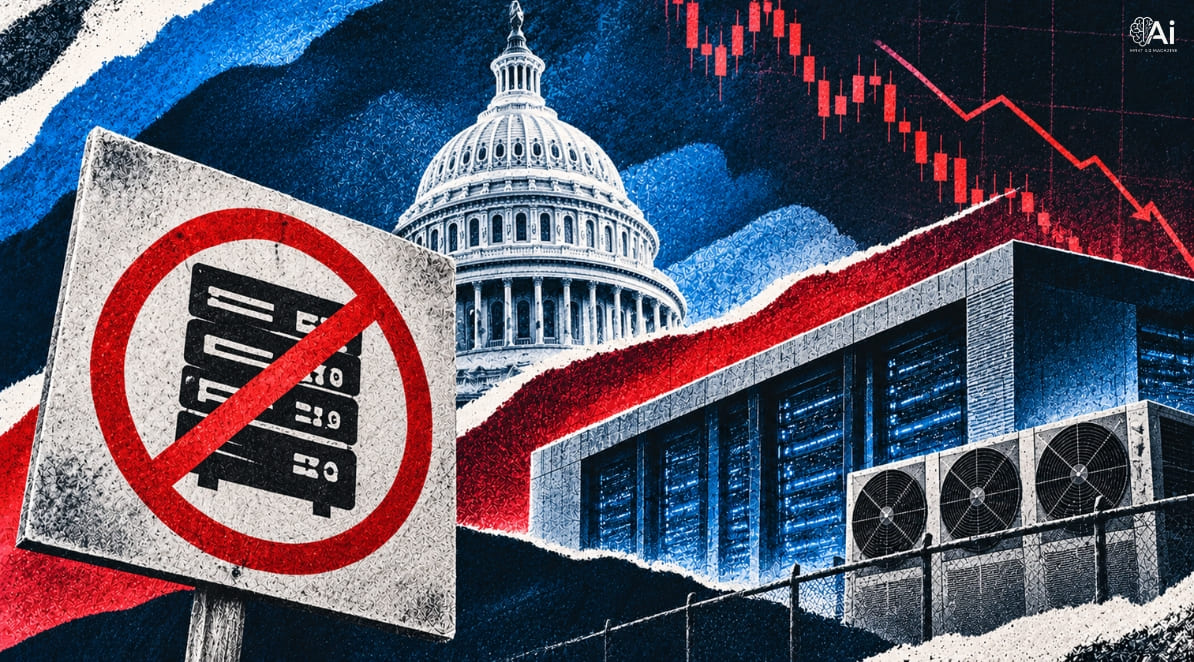
The U.S. midterms were a huge win for the Democratic Party, with blue candidates outperforming expectations at the federal and state levels. While affordability and government corruption were cited as voters’ biggest concerns, the rise of data centres was also a consistent issue across the country.
Forty-one ballot measures aimed to rein in data centre construction were up for a vote. Every single ballot measure, except one, was passed. Democratic gubernatorial candidates who ran on hardline stances against unregulated data centre construction won their elections, sometimes in states long governed by Republicans, like Ohio, Georgia and Texas.
Come 2027, a more strident regulatory environment is expected to follow for data centres and the AI industry. While President Donald Trump remains committed to building out AI infrastructure at a breakneck pace, newly elected officials promise a slower, more measured process that invites voters and local constituents to be part of the process. Given AI’s huge electricity, land and water needs, state governments hold considerable leverage.
Everything Is Bigger in Texas, Including the Upset
Few people, pollsters among them, thought that Democratic challenger Gina Hinojosa could unseat Texas Governor Greg Abbott as he sought a fourth term. But she did and did so partially by attacking Abbott’s record on data centre proliferation in the state.
Texas was expected to host 41% of new data centre capacity by 2028. However, Hinojosa has promised a moratorium on new data centre approvals until the Texas Legislature passes new protections.
On AI infrastructure, Governor-elect Hinojosa says she has no quarrel with AI or data centres and wants a policy that benefits Texans. In Hinojosa’s words:
“We have always been a pro-business state in Texas, but what changes now with me as governor is it has to be a partnership that benefits Texans….We need to stop what we’re doing with data centres until we have those protections. We can have a strong economy, strong industry and protections for the people of Texas. Those things are not mutually exclusive.”
In the same interview, Hinojosa noted that while local communities must have a seat at the table in negotiations with Big Tech, individual communities have different needs. They need to be able to walk away from the table and use their political will as leverage to get what they need for their communities.
Musk Looks to Orbit
As for Elon Musk, who spent at least $225 million in Texas to support Republican candidates, Hinojosa stands firm:
“What this is about is 99.9 percent of us are in the same boat against 15 billionaire tech guys that are frankly controlling the government….We can have a strong working relationship with Elon Musk and his companies, but it has to be on our terms.”
Texas is home to the headquarters of Tesla and SpaceX, both of which relocated from California. In response to Democratic candidates winning the Texas governorship, the Texas House, the office of the attorney general, and a U.S. Senate seat, Musk wrote that data centres in space were looking more appealing.
Musk’s purported dealings with the outgoing governor are likely to face greater scrutiny, while a reported plan to hand Boca Chica State Park to SpaceX is all but dead in the water. While Musk is likely to not shy away from a fight with the new Texas government, other AI leaders are already switching gears and adapting to the new political environment.
Altman Discovers Humanism
Amidst widespread pushback against data centre proliferation, OpenAI’s Sam Altman was already pivoting in his public proclamations. Now that the midterm results present a new political reality for the AI industry, his fealty to Trump is now a liability.
On the evening of Election Day, when it was clear that Democrats would win back control of Congress, Altman published a telling post on X:
Considering that Altman has previously derided the considerable resources needed to raise a child to adulthood, as compared to the resources needed to run a data centre, his turn towards a humanist point of view is clearly a business calculation.
A couple weeks ago, Altman was complaining that individual people were wasting RAM on their personal computers, arguing that a PC’s computing power is better utilised within a data centre. He has since walked back that claim too, saying his quote was taken out of context.
Slower Builds, Wider Moats
Candidates who campaigned on regulating AI and data centres won all over the United States. The issue is a bipartisan one. Voters across the political spectrum support regulation and in turn supported the candidates speaking loudly about it.
Despite Trump’s refusal to provide AI regulation at the federal level, state governments will use the leverage they have to protect their energy and water resources. AI leaders, like Altman, know this and are scrambling to position themselves favourably in the eyes of incoming political leaders.
While several victorious gubernatorial candidates have promised moratoriums on future data centres, there are still plenty of buildouts in progress. Moreover, the majority of political leaders in the U.S. have not argued for outright bans on data centres. Building-trades unions have also warned politicians that blocking projects will cost them union backing, citing the construction jobs at stake.
However, the AI industry is increasingly fuelled by debt and construction slowdowns could pose serious challenges for certain companies, namely neocloud companies that don’t enjoy the balance sheets of hyperscalers. Some analysts argue that slowing data centre buildouts would favour hyperscalers who already have computing capacity, while hurting upstarts who are trying to catch up.
The Debt Clock Keeps Ticking
Delays cost money because the buildout runs on borrowed money. In July, it was reported that more than $500 billion in debt was financing AI infrastructure and meeting investor resistance. Nearly 80% of data centre securities sold since early 2025 were trading at wider spreads than at issuance, and Prime Data Centers and Pure Data Centres Group had paused or dropped bond sales. That was before the election.
CoreWeave, the landlord for NVIDIA’s GPUs, shows how thin the margin for error is. It ended June with $35.1 billion of debt against a $104.2 billion backlog, which looks comfortable until the calendar enters the picture. The backlog arrives over several years, while the interest is due now.
Net interest expense was $640 million in the second quarter, almost a quarter of revenue. Adjusted EBITDA margin was 59%, but adjusted operating margin was 5%. The company guides to $35 billion to $39 billion in capital spending this year, and free cash flow was negative $5.7 billion in the second quarter.
The bond market has noticed. CoreWeave’s 2032 notes yielded more than 16% on November 6 against a 9.625% coupon, a brutal repricing that makes the cost of debt prohibitively expensive.
Priced for a Ban, Facing a Pause
Wall Street sold first and read the fine print later. On November 4, Sterling Infrastructure (STRL) fell 21.5%, Modine dropped 21.4%, Comfort Systems USA lost 15.1% and Vertiv slid 12.9%. The same day, Microsoft and Amazon each rose more than 6% as traders crowned the incumbents. When the broader market cracked on November 5, the Nasdaq fell 5.5%, and the picks-and-shovels names took another beating.
The market is massively overreacting. Goldman Sachs estimates that the states where newly elected governors promised to stop or pause data centre construction hold about 45% of planned U.S. capacity. That is the worst case, and it assumes every project in those states dies. Nobody is proposing that.
Hinojosa’s moratorium lasts until the Legislature passes new protections. Ohio Governor-elect Amy Acton wants projects to meet set standards before they go ahead. Those are conditions with an exit.
Where moratoriums do bite, the projects will move. AI companies still need the compute, and Morgan Stanley has warned that new state rules could split the country into areas open and closed to data centres. Capital will flow to the open ones.
The Backlash Crosses the Atlantic
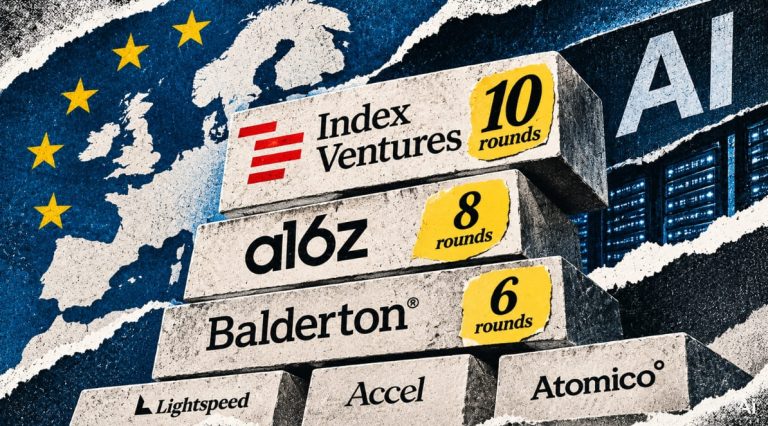
Meanwhile, opposition to data centres in Europe is growing. Protests in recent days have erupted in Poland, the Netherlands, Ireland, Denmark and other countries. While the European Commission has said Europe needs more data centres to maintain AI sovereignty, the populace is increasingly critical of data centres.
Given that European protests have occurred in the same week as U.S. elections that strongly rebuked unregulated data centre construction, the AI industry is facing serious hurdles seemingly everywhere.
However, considering the amount of capital already spent, the question is whether the newly empowered political opposition to data centres will slow the rapid pace of AI, or merely consolidate power among a select few.
A Pause Has an End Date
Voters and protesters on both sides of the Atlantic just told the AI industry the same thing: build, but on our terms. In the U.S., that message now has governors, a Democratic Congress and dozens of local moratoriums behind it.
Texas, the state that was supposed to carry 41% of new capacity by 2028, is about to hand the permit desk to a governor who campaigned on a freeze. Musk is eyeing orbit. Altman has discovered humanism.
The buildout will slow, and the companies living on borrowed money will feel it first. The demand for compute is still there, and the projects will chase the states that say yes.
Steve Eisman said on his podcast that slowing down the data centre buildout “could eventually be a positive… for the hyperscalers… The torrid pace of construction has caused these companies to raise massive amounts of capital, and investors are frankly growing sick of it. A slower pace could mean that these companies could return to positive cash flow, perhaps even in late 2027, thereby enabling them to fund AI data center construction purely out of cash flow and at a more sustainable pace.”
Buy the Fear
None of this means the builders walk away clean. Delays and relocations can dent revenue growth and earnings at the picks-and-shovels companies for the next six to 12 months. The market has priced that in, and then some.
Sterling is the cleanest example. CEC, its Texas electrical contractor, brought in $426 million of the company’s $1.56 billion in third-quarter revenue. After two days of selling, the stock closed at $244 on November 5, 75% below its June high. It now trades at 13.7 times trailing earnings and 11.4 times forward earnings, for a company that just grew revenue 127% and holds $4.14 billion in signed backlog. That price assumes a ban on data centres. What voters approved was a pause.
The hyperscalers already got their rally. The fear, and the discount, sits with the picks and shovels. For investors with the stomach for headline risk, that is where to buy the fear.
Author: Tim Tolka, Senior Reporter
See Also:
Dutch Activists Occupy Microsoft Construction Site During Europe-Wide Data Centre Protests
Did Elon Musk Just Call the End of the AI Debt Boom?
The editorial team at #Mrkt3.0 has taken all precautions to ensure that no persons or organisations have been adversely affected or offered any sort of financial advice in this article. This article is most definitely not financial advice.