

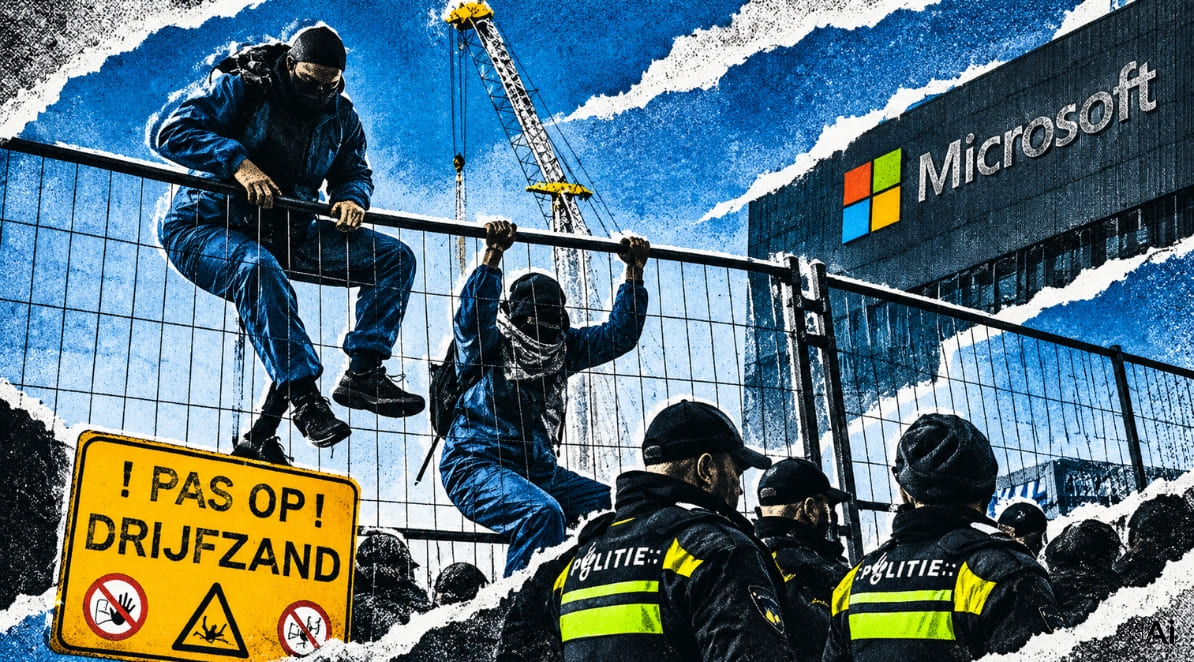
On the morning of November 6, activists broke onto the construction site of a Microsoft data centre near Amsterdam Sloterdijk. Dutch media reported that the occupation was organised by the direct-action group Geef Tegengas. Around 100 people reached the site. Riot police were deployed and made arrests.
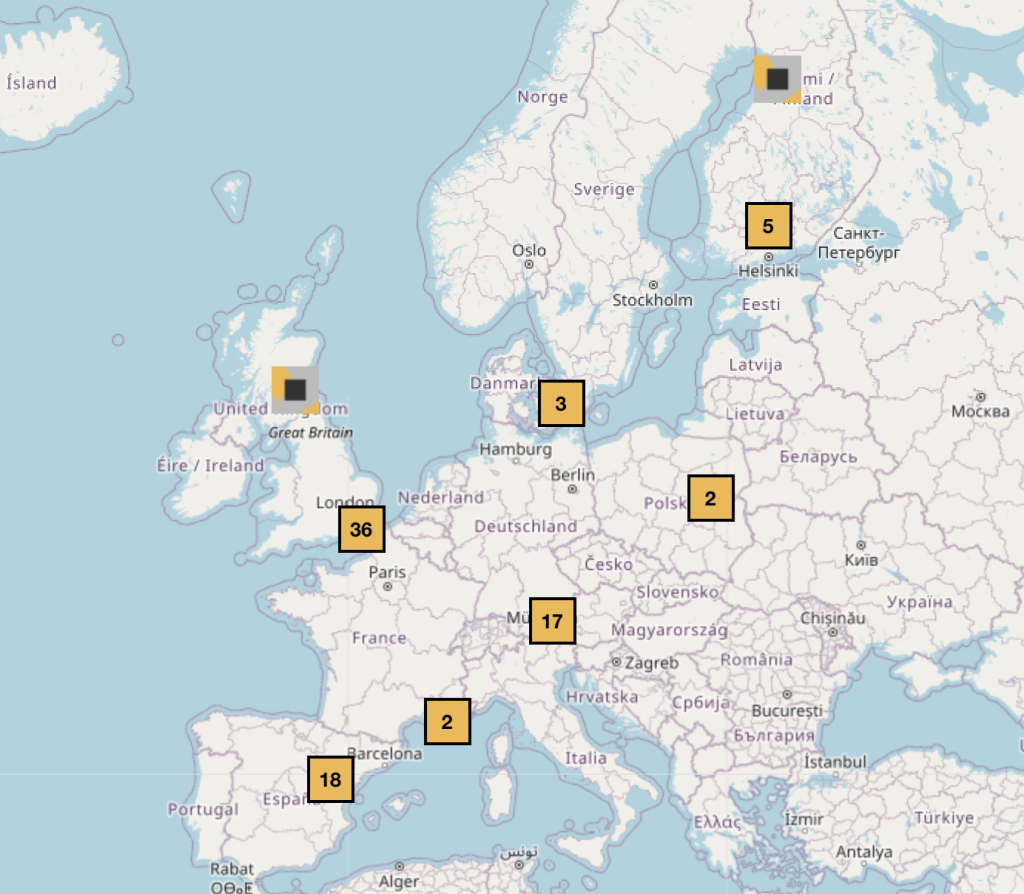
The occupation coincides with coordinated actions on November 6-7 under the banner Stop Dirty Data Centres, involving more than 100 groups across 15 European countries, including Ireland, Poland, Denmark, Finland, Spain, the Netherlands, France and the UK. Banners and slogans at the Amsterdam site also included explicit references to Microsoft and the war in Gaza, reflecting the broader political framing reported from the scene.
What Is Planned Outside Amsterdam?
Demonstrators planned a protest outside the Polish parliament in Warsaw, a march in Dublin, a demonstration outside a Microsoft data centre in Denmark and a teach-in near a planned Amsterdam site.
In the UK, a photocall was scheduled for 8am on November 6 outside the Department for Energy Security and Net Zero in Whitehall Place. A Community Day of Action takes place on November 7 at Brick Lane in London. The same day, a family event is held at St Michael’s & All Angels Church in Great Torrington, Devon.
Why the Protests Are Happening
Campaign groups say the rapid expansion of large-scale data centres is outpacing planning, energy and water frameworks. They argue that facilities should be paused until clear rules exist on whether and under what conditions they are built, with meaningful public participation.
Annual European data-centre investment is estimated at €25 to 26 billion this year, up from €12 billion in 2020, with projections of €176 billion between 2026 and 2031. In the UK alone, there are 315 data centres currently queueing for grid connection.
What Do Industry, Ministers and Analysts Say?
The tech industry says data centres create jobs in construction and operation and support AI-driven economic growth. The UK government has made AI a central part of its growth strategy. A recent investigation by Spotlight on Corruption found that business and trade groups dominated meetings with UK ministers on data centres, while environmental groups were not included.
Alan Howard, an analyst at Omdia, said “datacenters turned into an opportunistic political football.”
Friends of the Earth, Greenpeace and Foxglove, a London-based tech campaign, are among the backers.
Why US Mid-Term Results Are Strengthening Calls for Data-Centre Pauses
The recent US mid-term elections delivered a clear Democratic majority in Congress. Across multiple states, opposition to the rapid build-out of AI data centres was a visible campaign issue. Candidates who pledged pauses, tighter planning controls or stronger scrutiny of energy and water use won in key locations, including Texas and Georgia.
Local concerns about electricity demand, water consumption and community impacts had become a significant factor for voters. These results have added weight to the argument already being made by European campaign groups.
On both sides of the Atlantic, communities and voters are raising the same questions about how many large-scale data centres are needed. The election outcome shows that these concerns are now influencing political outcomes, reinforcing calls for a pause until clear frameworks and public participation are in place.
Microsoft had not commented publicly on the Amsterdam occupation at the time of writing.
Author: Grace Sharp
See Also:
Who Is Fighting Data Centres in Europe? The 2026 Opposition Map
Who Is Fighting Data Centres in the UK? The 2026 Opposition Map
“We Want That Data Here”: UK Chancellor’s New Deal for UK Data Centres