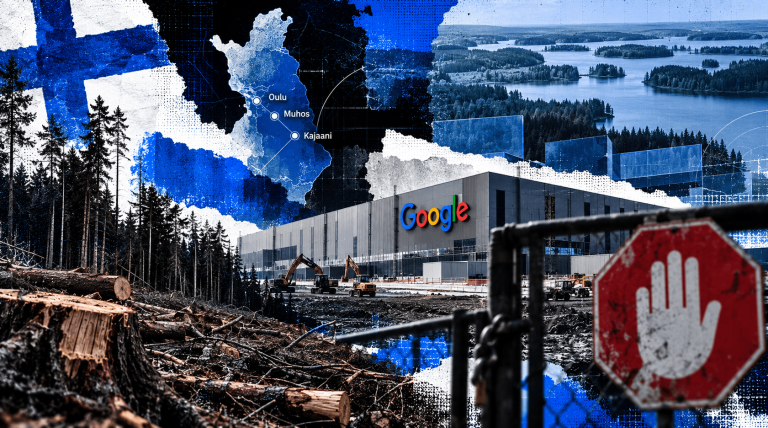

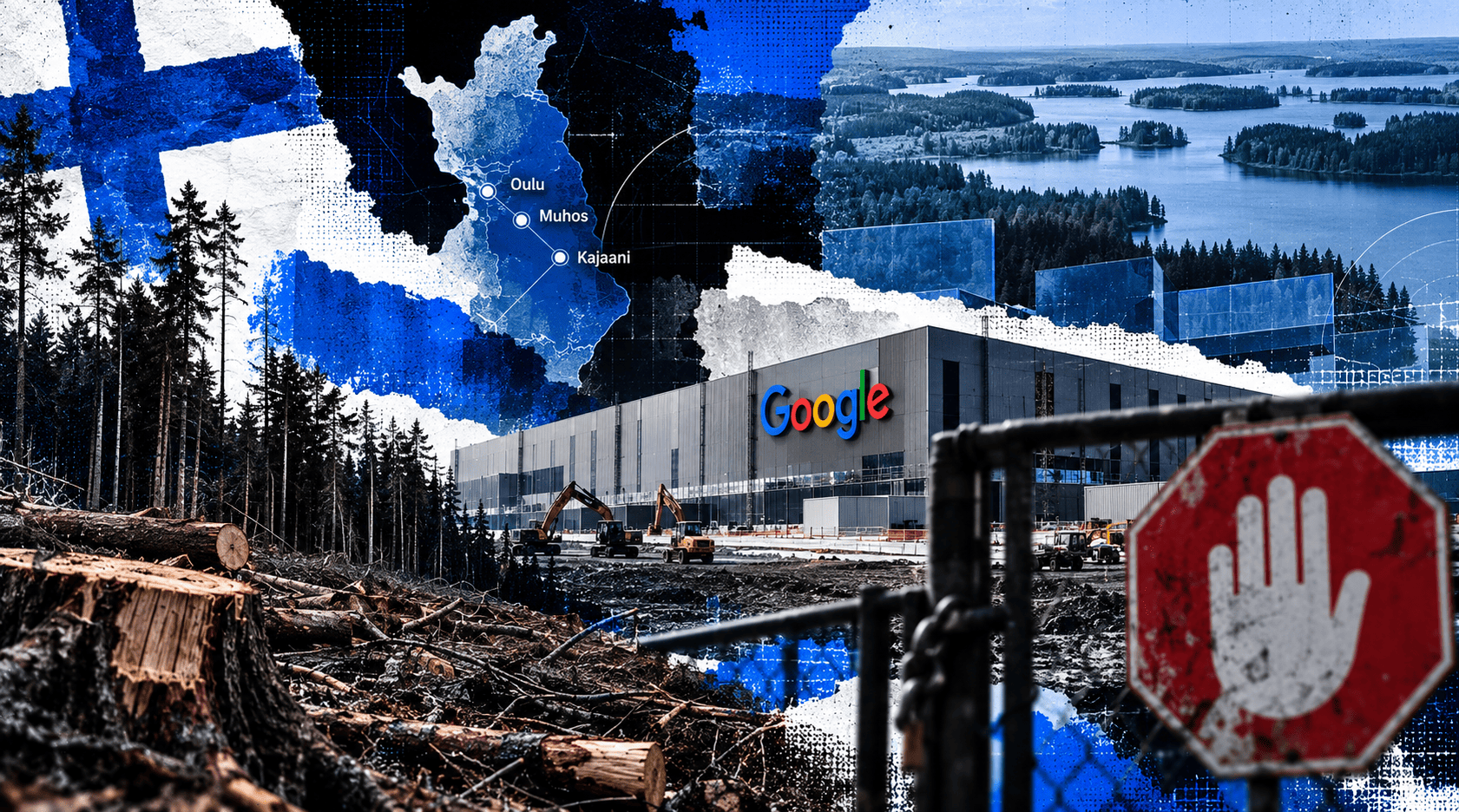
Finland’s Licensing and Supervision Authority (LVV) ordered Google subsidiary Tuike Finland to suspend preparatory work with a substantial environmental impact at its Muhos and Kajaani data centre sites, until environmental impact assessments (EIAs) are finished. Google says it received the letters on October 6.
Finland has seen a surge in data-centre plans, with one industry count putting the number of announced or planned projects at around 145 (many of them still at early stages).
Google is developing three data centres in the country as part of a €13 billion investment announced in September, and already has one operational data centre in Hamina. Donald Trump criticised Google’s Finnish project and publicly called for the company to reconsider.
Tommi Muilu, Head of the Environmental Department at the LVV, said work had already gone far. “In the opinion of the Finnish Licensing and Supervision Authority, extensive preparatory measures have already been taken in the project areas based on the currently available reports.” He explained these measures included “the removal of trees, the stripping of topsoil, the construction of construction site roads and storage areas, changes to ditches and culverts, and stormwater arrangements.”
What Happens If Google Ignores the LVV Order?
The LVV’s order does not cover planning, measurements, soil surveys or other work expected to have minimal environmental impact. If Tuike Finland does not comply, Finnish authorities will consider administrative enforcement under special legislation or the EIA Act.
However several questions remain open. The LVV notice does not say when the assessments will be finished. Reports do not say how the suspension will affect the timelines of the Finnish data centres. Google’s statements also do not say how much power the Muhos and Kajaani sites would draw.
How Many Trees Were Cleared at Muhos and Otanmäki?
An estimated 250,000 trees were cleared at Muhos, across about 330 hectares (815 acres) of forest.
Mari Annala, an ecologist with the Finnish Association for Nature Conservation (SLL), estimates another 150,000 trees were felled at Otanmäki. She has said the wood cannot be sold to processing plants because, in her view, the felling was illegal. Google has denied that the logging was illegal, stating that it was carried out in accordance with the Forestry Act.
The sources differ on the second site. One report names Otanmäki, about 100km south-east of Muhos, while another names Kajaani. A Google spokesperson places Otanmäki inside Kajaani.
Google says it plans to plant trees across 130 hectares at Muhos but conservationists say that is too low to matter. Google bought 1,400 hectares in Kajaani and Muhos from Metsähallitus in 2024, and 900 hectares in Vaala in February for a possible data centre project.
What Does Google Say About the Muhos Clearing?
Michiel Sallaets, Google’s communications manager, denied illegal forestry in a statement to STT, the Finnish news agency, earlier in October. He said logging on Google-owned land was in full accordance with the Forestry Act. Sallaets also told STT that all potential profits from selective logging will be donated to local projects.
Antti Järvinen, Google’s Finland country manager, apologised for the clearings. He said Google acted on its best understanding of the legislation at the time.
A Google spokesperson said the company stopped preparatory work at Muhos and Kajaani after the letters arrived and sent the LVV a formal response.
Will Finland Change Data Centre Rules After Muhos?
Veli-Matti Uski, director general at Finland’s ministry of environment, said the ministry is monitoring the development of the data centre sector and the application of its legislation. The ministry is prepared to propose legislative amendments as necessary.
Prime Minister Petteri Orpo called attracting investment a “top priority” when the plans were announced, and later called Muhos a “cold shower.”
More than 93,000 people signed a petition demanding more data centre regulation and a fee to compensate local communities.
Reports say the data centre push is likely to be a key issue in Finland’s April election.
Author: Grace Sharp