
Like many people today, I have family members who are getting old. They are no longer able to do the things that they want to do. They need help with basic chores. Most importantly, they need company and to feel like they are still important.
Mainstream television has increasingly embraced the topic of artificial intelligence and robotics. Not just when it comes to documentaries, but also in films and TV series. Imagine my shock when Patrick Trueman, the famous character played by Rudolph Walker on EastEnders, started interacting with an AI version of his recently passed son. It was moving just watching him talk through things with his now dead son that he was not able to before he passed. Trueman made it look like it might be a thing.
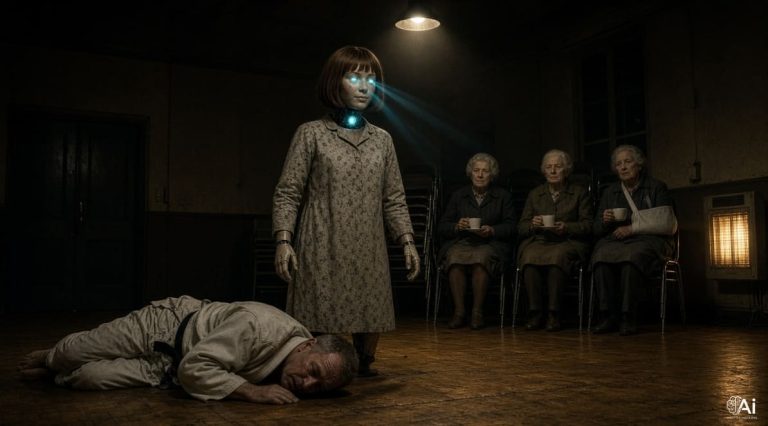
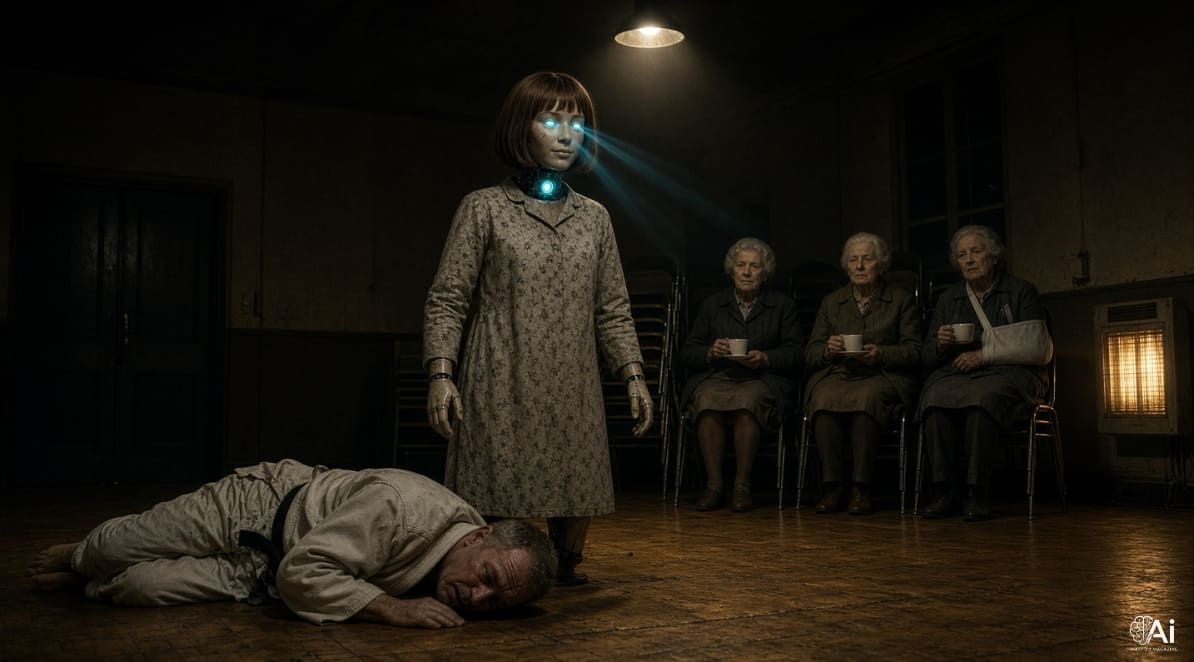
The BBC didn’t stop there. In July it put out Ann Droid, created by Diane Morgan, who plays Linda — a second-hand eldercare robot bought for Sue, a widow played by Sue Johnston. At first the machine drives her mad. Then it becomes company.
Audiences felt the same ache. Episode one of Ann Droid drew 7.6 million viewers in 28 days (the BBC’s second-biggest new scripted launch of the year) and later reached 8.1 million. On 27 August 2026 the BBC commissioned a six-part second series.
Linda is an Ann Droid Z58/100 Basic Eldercare Robot. Morgan has said the idea started with a story about care robots being rolled out in Japan. Series two is the moment to ask something sharper than “isn’t this sweet?”: how close is Linda to something you could order for your mum?
Where they already exist
In Japan, this is already a growing market. More than 29% of the population is 65 or older. Subsidies have put companion and assistive robots into thousands of care homes. PARO, the therapeutic baby seal, has been used for two decades. Toyota, Honda and SoftBank sit behind a whole industry of lifting aids, monitors and social companions.
South Korea went further into people’s living rooms. Hyodol, a ChatGPT-powered companion doll, has been given to more than 12,000 older people through government programmes. China is pushing humanlike companions at volume: UBTECH’s U1 range is listed from about $27,500 to well over $100,000. In the United States, ElliQ (a tabletop talking companion, not a walking humanoid) is already in older adults’ homes via state ageing programmes. Washington State approved it as a Medicaid benefit in 2026.
Europe is no longer only watching. Germany has one of the continent’s largest fleets of social robots in care homes. An EU-backed programme in Barcelona has put hundreds of assistive robots into homes and centres. In the UK, PARO is used in NHS dementia settings.
What they cost, who sells them, and whether you can send them back
There is not one Ann Droid. There are four price bands.
Comfort pets, £65–£180. Joy for All cats and dogs are on Amazon and specialist UK retailers around £150. They purr and respond to touch. VAT relief often applies. Returns follow normal online rules: usually 14 days.
Therapeutic robots, about £6,000. PARO is listed in the UK at £6,000 ex VAT. Families can buy one; most go into hospitals and care homes. This is medical kit, not a gadget you post back because it didn’t click.
Talking companions, about $250 plus a monthly fee. ElliQ is a lease: roughly $249 to start and $39–$59 a month. Cancel, and you return the hardware. Official shipping is still US-only, with Japan next. Britain is not on the doorstep yet.
Home humanoids, about $20,000 or $499 a month. This is the Linda-shaped future. Norway’s 1X sells NEO for $20,000 outright or $499 a month after a $200 deposit the company says is refundable until shortly after your order invitation. Early units fetch, tidy and keep company; hard chores often still need a remote human. US deliveries come first; the UK is widely talked about for 2027. Tesla’s Optimus is still aimed at late 2027 for consumers.
When does Ann Droid become a normal buy for our parents?
Ann Droid is set in 2029. That date is ambitious, not crazy.
The robots-for-seniors market was about $3.8 billion in 2025 and is forecast near $14 billion by 2034. If factories scale, a useful home machine could be a rich-family purchase by the end of this decade, and a planned spend for more households in the early 2030s if the price falls towards £8,000–£15,000. It will not be as ordinary as a dishwasher until later than that.
Two things will slow the sitcom version. The jobs that would help most — lifting, bathing, dressing — are the ones where a mistake is dangerous. Early machines will remind, fetch and talk. They will not replace a carer. And Europe’s AI and medical-device rules will treat a robot that watches an older person’s body as more than a toy.
So, will we all have one? Not all of us. Not next year. And not the full Diane Morgan package. But companion robots are already ordinary in Japanese care homes, subsidised in Korea, reimbursed in at least one US state, and sitting in British dementia wards in the form of a seal that costs more than a decent holiday. Humanoids you can reserve for the house exist at used-car money, with a deposit you can get back.
Series two will keep asking what is replaceable and what is not. For anyone with ageing parents, the practical question is smaller. If they need company, that product already has a price list. If they need someone to get them off the floor after a fall, you still need a human — and, for a few more years, so does Linda.
Ann Droid is on BBC iPlayer. Series two has no date yet. The robots will not wait for the schedule.
Author: Andy Samu
See Also:
Who Are Europe’s Most Influential Humanoid Robots in 2026? – MRKT3.0
China Controls 90% of the Robot Market. Their Robots Can’t Walk.
Is Tesla Overhyped? Enter NEURA, Europe’s AI Robot Challenger