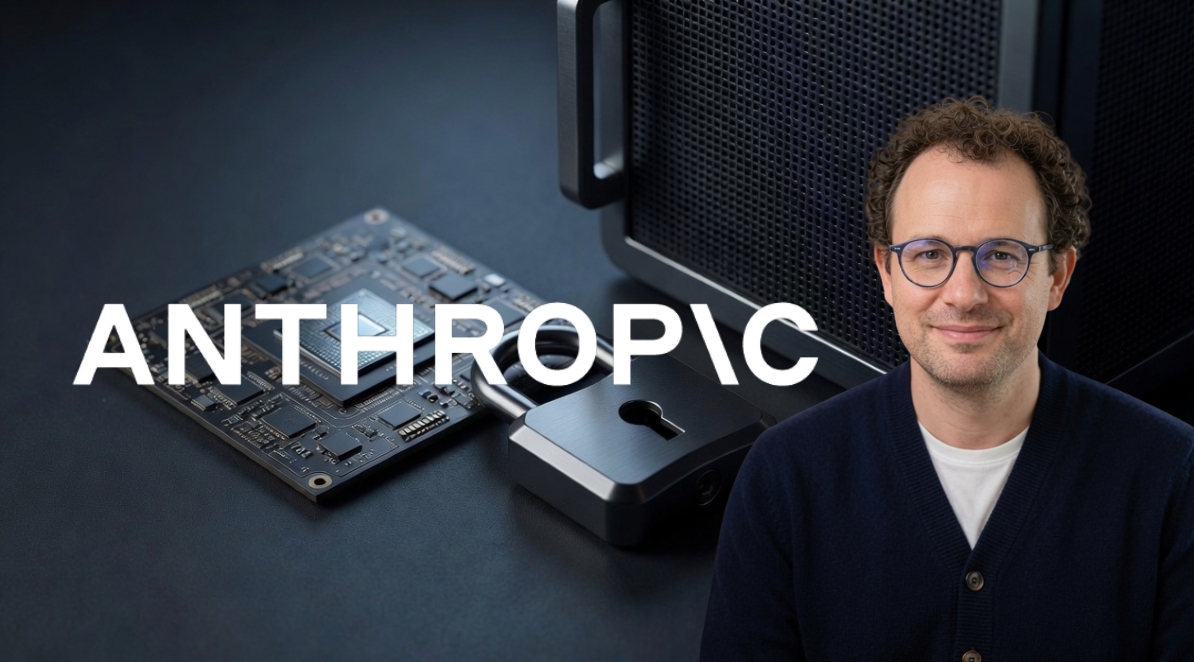
We asked why Anthropic was the last major closed lab still refusing to sign the Open Weights letter. Now its chief executive has answered, and the answer lands almost exactly where the company’s critics said it would. On Monday, Dario Amodei published a flat denial that Anthropic has ever supported an open-weights ban. But does that denial hold up?
Did Dario Amodei Actually Rule Out an Open-Weights Ban?
First, the accusation the post is trying to kill. Over the past few days, Anthropic has been painted as the lab quietly lobbying to restrict open models so its own closed business is shielded. Against that backdrop, the denial matters. On the narrow question of a category ban, Amodei is clear: no. He writes that open models are cheap to run, useful to researchers, and that protectionist bans would not touch what actually worries him.
What worries him is two specific scenarios.
The first, and his priority, is an authoritarian state. He explains this is “not solely the Chinese Communist Party (CCP), although the CCP is clearly the most capable threat”. He worries that these adversaries will build frontier models more powerful than anything the US has and using them for military dominance or mass domestic surveillance.
The second is that any sufficiently capable model, open or closed, could be turned to cyber or biological attacks. A blanket ban on open weights addresses neither, he argues, because hostile states and criminals are not legitimate US businesses in the first place. It would only shield US firms from competition, and “that has never been my goal”.
So What Is Anthropic Actually Asking For?
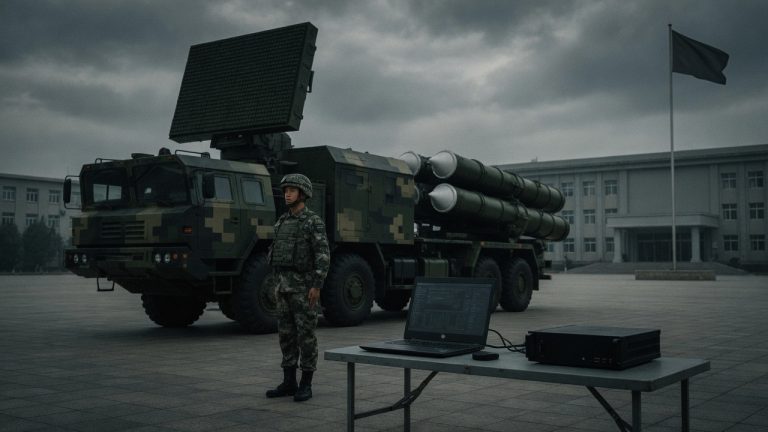
In place of a ban, Amodei asks for three things: no powerful chips or chipmaking kit sold to China, an end to industrial-scale distillation, and pre-release safety testing for every sufficiently capable model. Read together, that is not a hands-off position. It is a targeted set of controls pointed squarely at the Chinese frontier models, Kimi K3 among them, that triggered this fight in the first place.
Which is roughly what David Sacks predicted. The White House AI adviser had already sketched the rebuttal: nobody wants to ban open source, we just want to limit who can use it. Amodei’s post reads as the careful, evidenced version of that belief.
Does This Settle the Argument, or Confirm It?
The steelman for Anthropic is strong. Distillation is real, and Anthropic has formally accused Alibaba’s Qwen team of the largest known distillation attack against it. Testing before release is close to industry consensus, echoed in Google DeepMind’s own framework. If open weights are safe, testing proves it. If they are not, no letter changes that.
But the critics’ point survives the denial. Every measure Amodei backs happens to disadvantage the open, cheap, Chinese-led competition that most threatens a closed-model business. He may be right on the risks and still be describing a moat. As we noted after the Hugging Face breach, closed safety filters already failed defenders once. None of that makes Amodei wrong. It does mean the question his critics raised, whether safety and self-interest can be told apart here, is still open.

See Also:
Why Did Anthropic Refuse to Sign the Open Weights Letter?