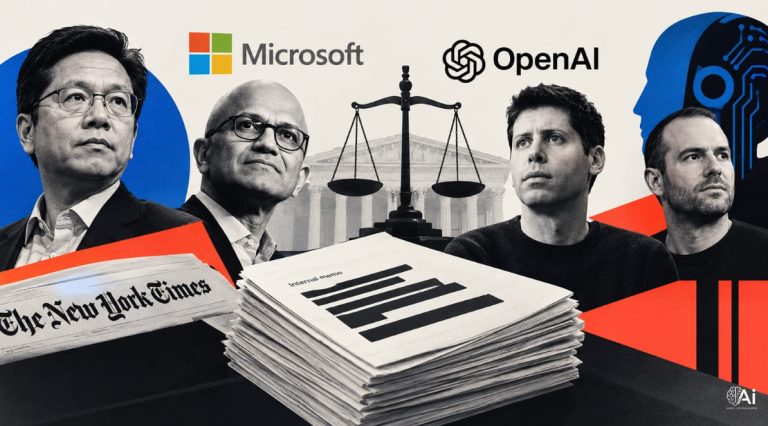


NVIDIA chief Jensen Huang was mid-interview at the All-In Summit when the phone rang on Monday, 14 September. He put President Donald Trump on speaker. The president used the first joke of the call on Huang himself: the man who can design a chip nobody copies for a decade, Trump said, still could not work a speakerphone.
Then the policy line arrived.
“The robots will not be taking over,” Trump told the room. “The AI will not be taking over the rest of the world. The whole thing is a hoax.” Data centres, he added, are “great.” They make people and states wealthy. They are “the oil of the next 20–25 years,” bigger than the internet. People who block them, he said, are playing into the hands of political opponents and of China. “We’re not going to let that happen.”
Huang did not argue. “You’re right. We’re not going to let that happen, sir.” He added that America should make sure every industry, company, state and person wins the race.
Why the Call Happened This Week
On 12 September Anthropic chief executive Dario Amodei published We Must Pace the Frontier. The essay does not call for a halt. It asks labs to slow the rate at which they raise capabilities, because models are now helping to build the next models and because safety work has not kept pace.
Amodei’s three steps are specific: embedded third-party evaluators inside the labs; shared limits among democracies; a harder, later conversation that includes China. Anthropic said it would take the first step on its own. Sam Altman, Elon Musk and Demis Hassabis publicly backed the direction.
That is not the story Trump answered.
On Truth Social the same Monday he called warnings that AI would “take over, consume, and destroy the World” a hoax, compared them to climate change and the Russia investigation, and named Amodei. The only guardrail required, he wrote, is “a STRONG AND SMART (High IQ!) PRESIDENT.” He described a “SICK conspiracy” against AI and data centres and said China is the only party pleased by the backlash.
What Huang’s “Yes, Sir” Actually Does
Huang has spent 2026 arguing that open weights and American compute should stay in the race, including against Chinese models. NVIDIA has also just locked in its $12.9 billion Hugging Face deal, a purchase Europe is watching because Hugging Face is still the default public square for open models.
Agreeing with the president on stage does not settle NVIDIA’s product roadmap. It does settle the political weather around the product. If the White House treats a coordinated slowdown as a gift to Beijing, the company that sells the chips has little incentive to ask for a speed limit first.
That is the split MRKT3.0 mapped when Amodei’s essay was published: almost nobody of weight wants a blind race. The fight is over who sets the cap — the labs, or the state. Trump’s answer is that the cap is already in the Oval Office.
Vice President JD Vance has called industry requests for new rules a “Trojan horse.” David Sacks co-hosts All-In. He was White House AI and crypto czar until March, and now co-chairs the president’s science advisory council. He has long treated safety talk as regulatory capture by the closed labs.
Data Centres Are the Real Fight, Not the Robots
Trump’s second sentence matters more than the first.
If takeover talk is a hoax, then local resistance to data centres is also a hoax. That is the move. It collapses two different objections, existential risk and electricity bills, into one smear.
Europe already knows the second objection is not a smear. The data-centre boom has hit a political ceiling on both sides of the Atlantic: household power prices, water, noise, grid queues, and courts. On 31 July the Commission opened bidding for up to seven AI Gigafactories.
Trump’s “oil of the next 20–25 years” line is an American industrial-policy slogan. Translated into European planning language it is a claim that permitting should move faster than local consent. That claim is already failing in Ireland, the Netherlands, parts of Germany and in US states that have opened audits or moratoriums.
Hence the other live question on this site: whether nuclear can underwrite the buildout, and why the obvious cold, wet sites, Iceland among them, are still not Europe’s default answer.
What This Does to Europe’s Week
King Charles is sitting some of the same firms down at Dumfries House this week to talk shared principles, not new law. OpenAI, Anthropic, Google DeepMind and NVIDIA are among those expected. The palace cannot set a speed limit. It can only ask whether the people who build the systems still want a common language for risk.
Trump has already given his answer from Los Angeles: the risk story is a hoax, the race is the point, and China is the audience that benefits if the West blinks.
The clip treats those as the same argument. They are not. Pacing is about how fast the models get better. Data centres are about who pays for the power. You can think the robot takeover talk is nonsense and still have a grid that cannot carry the load.
Trump tied them together on speakerphone. Huang let him. That is what the call actually did. It did not cancel the robots. It told Europe the United States is not joining a slowdown, in a week when the labs asked for one. The Gigafactories still need watts. Those do not arrive by phone.
Author: Andy Samu
See also:
“We Must Pace the Frontier”: Who Is For It, and Who Is Against It?
King Charles Will Host AI Bosses This Week as Threat Warnings Mount