
June 3, Brussels unveiled its grand plan to triple the continent’s data centers and wean itself off American clouds. Yet, roughly 1,800 miles north, an island runs its servers on volcanoes and waterfalls, cools them for free, and hosts 80-150 megawatts of Europe’s AI. Perhaps Europe has less of a power problem, and more of a nerve one.
The Tech Sovereignty Package has been years in the making. The plan works to beef up the Chips Act 2.0, deploy a brand-new Cloud and AI Development Act, name an open-source strategy and (finally) provide Europe’s first ever legal definition of “digital sovereignty.” As Europe continues to lean on non-European suppliers (Amazon, Microsoft and Google run roughly 70% of its cloud), Brussels’ mission now is to decrease this dependency.
So Brussels is reaching for the levers. The revised Chips Act would let the Commission override chipmakers’ supply contracts in a shortage and fine firms up to €300,000 for withholding data. The cloud law would bar US platforms from holding sensitive government information, the kind of move the Netherlands already made when it blocked an American takeover of the company behind its national login system.
It’s bold, and it’s overdue. However, this all rests on one unglamorous thing nobody wants to talk about: electricity, and somewhere to put the servers.
Big Targets, No Sockets
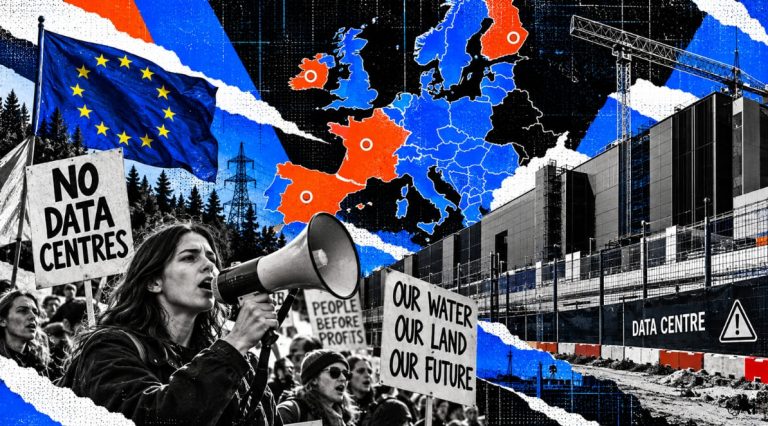
The Cloud and AI Development Act sets a genuinely enormous target. Triple the EU’s data centre capacity within five to seven years with a focus on AI gigafactories and hyperscale sites. This idea sounds fantastic – right up until you ask where the power and the planning permission are coming from.
Because the track record is not encouraging. The EU’s flagship plan for five AI gigafactories is already stumbling. The bidding round slipped from May to July and only two of the five sites can be funded before the next budget cycle in 2028. That’s not looking too promising for Brussels.
Meanwhile the actual money, went somewhere else entirely. SoftBank just committed €75 billion to data centers in France. That means Europe’s largest single AI infrastructure is now tied explicitly to France because the country offered a low carbon grid, cheap land and engineering talent. SoftBank’s deal now dwarfs the entire EU gigafactory program, and both China and the US are still outspending the bloc by a great distance.
So the ambition is real and the appetite is real. The problem is that everyone is hunting for the same thing. Somewhere with a lot of clean cheap power and a climate cold enough to stop the machines melting.
The Answer Could be Up North
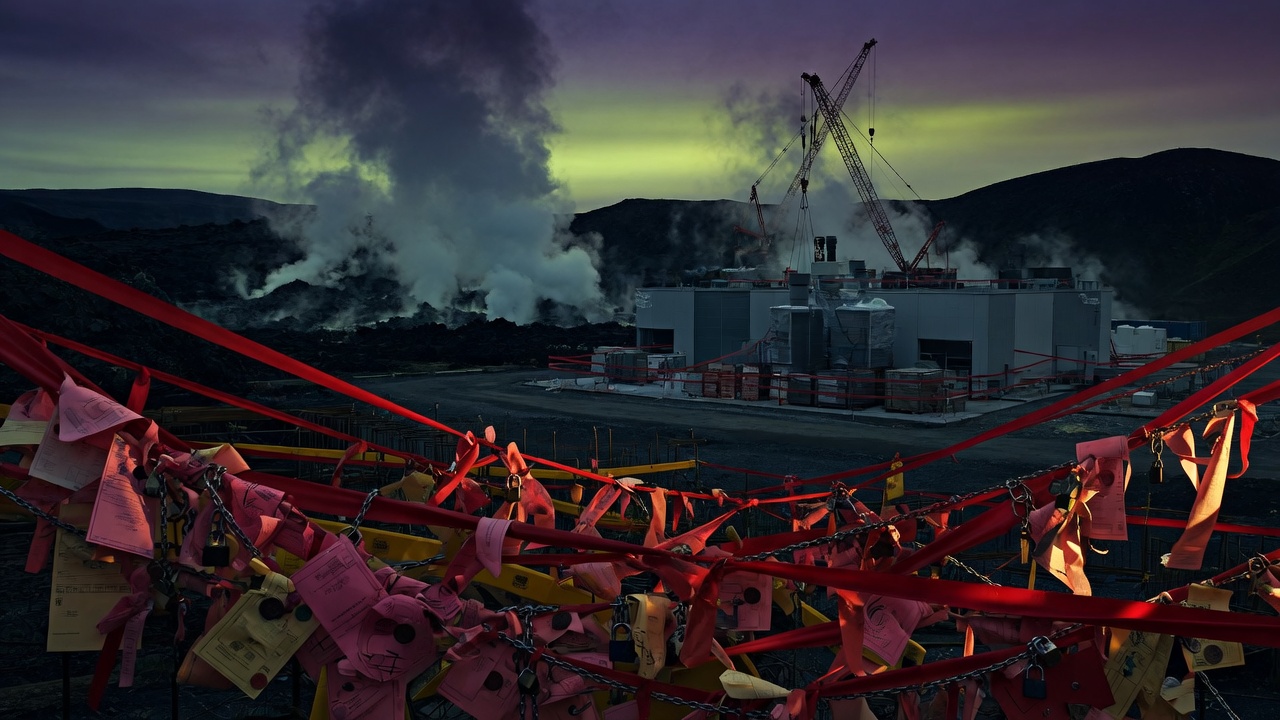
Iceland is, on paper, the single best place on Earth to run an AI data centre. The entire country runs on almost 100% renewable energy from geothermal heat straight out of the ground and hydropower. Its naturally cold air means operators get their cooling the single biggest operational headache for AI hardware essentially for nothing. This means no carbon guilt, plus no cooling bill, plus no reason to apologise to anyone’s climate target.
This idea is also not just theoretical, it’s already been happening, just quietly.
Nordic operator Verne and AI hyperscaler Nscale are rolling out around 4,600 Nvidia Blackwell Ultra GPUs across an Icelandic campus, one of the largest liquid cooled installations in Europe. Up in the north a separate venture has signed up to build a 50 megawatt geothermal powered site at Húsavík complete with district heating aiming to become one of Iceland’s first true hyperscale facilities. Operators reckon they can build a bespoke centre in twelve months partly because Nordic governments actually want them there.
In simple terms… the power is green, the cooling is free, the GPUs work, and the locals are willing. Is Iceland the secret to Europe’s AI sovereignty?
So Why Is Iceland Still a Rounding Error?
For all that natural advantage one industry tracker counts just one tracked AI data centre facility and around 80-150 megawatts of known capacity in the entire country.
In fairness, the island was never going to power all of Europe’s AI by itself. It is small. Its grid is finite, the subsea cables linking it to the mainland are limited, and Icelanders are entitled to ask how much of their cheap clean power should feed foreign server farms rather than homes and industry. So, Iceland alone is not a magic fix for Europe’s energy problem.
But that is not really the argument. The argument is that Iceland is the clearest example of a continent wide pattern. Europe is sitting on a belt of exactly this kind of advantage (Iceland and Norway’s geothermal and hydro the volcanic energy under parts of Italy and Hungary) but treating it as an afterthought instead of a strategic asset.
Europe Has the Power, But It’s Missing the Spine.
The thing slowing Europe down is not a shortage of clean megawatts or clever engineers. It is permitting that drags on for years, transmission lines that never get built, and a reflexive local instinct best summed up by the acronym BANANA (Build Absolutely Nothing Anywhere Near Anything).
You can pass the most ambitious Cloud and AI Development Act in the world. But if it still takes half a decade to approve a power line to a geothermal field you have not created sovereignty. A genuinely serious version of this strategy would treat Iceland, Norway and Europe’s geothermal pockets like the national assets they are.
Instead, Europe is doing the thing it does best… Writing rules.
The technology is not the bottleneck. The geology is not the bottleneck. Europe is the bottleneck. And until that changes sovereign AI will keep meaning what it has always quietly meant on this continent. A brilliant idea, a beautiful document, and somebody else’s data centre doing the actual work.

See Also:
Gaia AI Factory: Why EuroHPC Chose Krakow for Europe’s Most Strategic Supercomputer
How Denmark Quietly Became Europe’s AI Powerhouse in 2026
What Is Estonia’s X-Road and Is It Key to Europe’s AI Sovereignty?