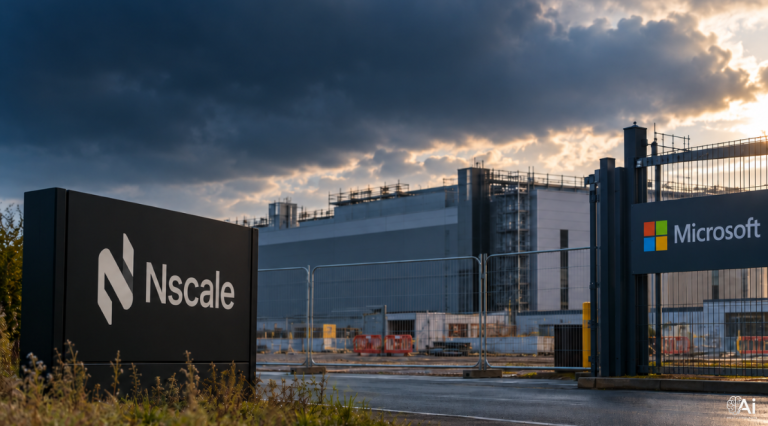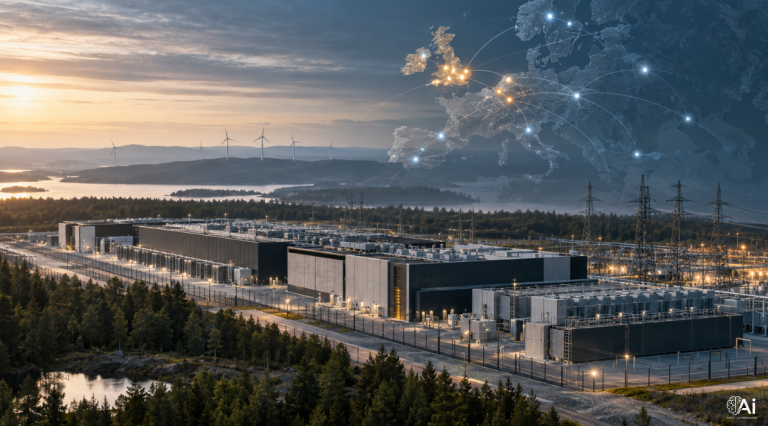

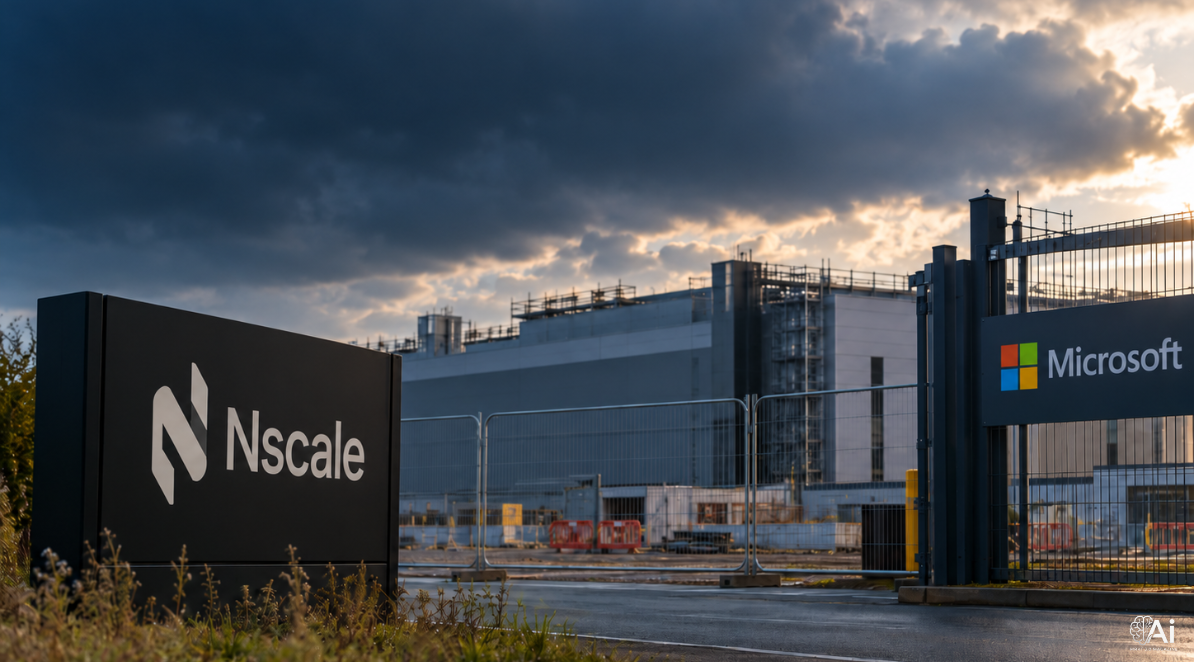
Microsoft has pulled out of the deal to use Nscale’s planned data centre in Loughton, Essex. The site was meant to run 23,040 NVIDIA GB300 GPUs and supply 50 megawatts of computing power for Azure from early 2027, with the option to go up to 90 megawatts. Nscale had pledged £2 billion to the project. UK Power Networks has told Nscale that the grid will not be able to deliver enough power until the early-to-mid 2030s. The exit was first reported on October 18.
The same week, Jensen Huang told CNBC that demand for neoclouds is “off the charts” and that the real constraint is working capital, not customers. The Loughton exit shows how power delays can still cancel a signed deal even when demand is high. Both companies say they are still working together elsewhere.
What Happens to the $103 Billion of Signed Deals?
The Loughton exit takes one planned site off the table. It does not cancel the rest of the Microsoft relationship.
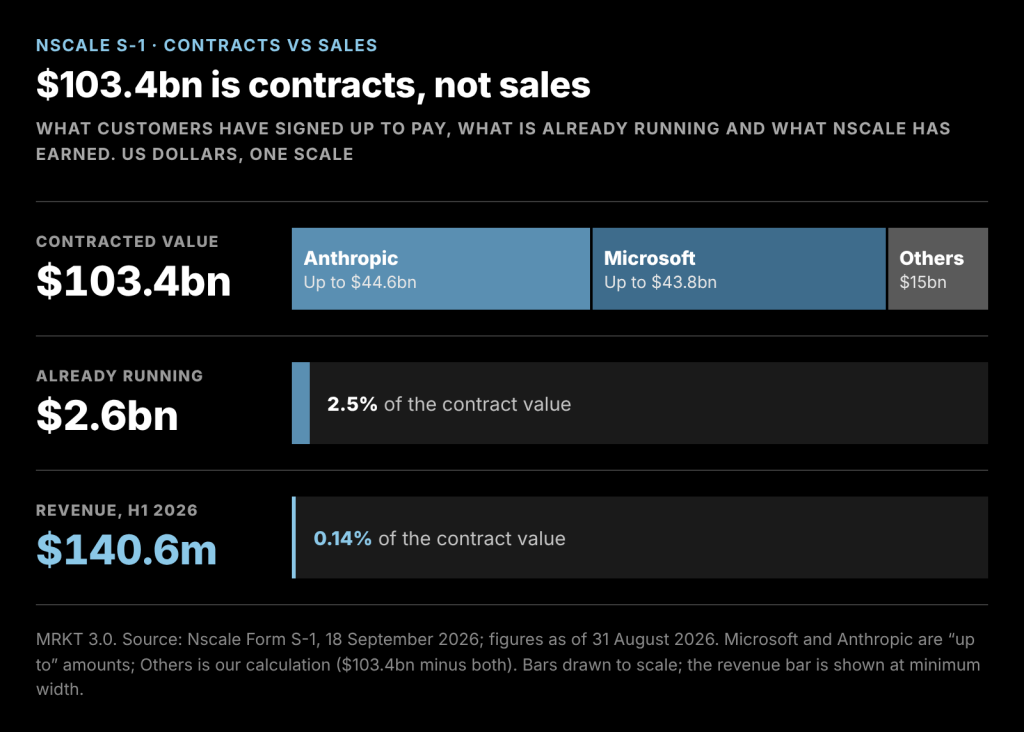
In its September prospectus, Nscale said it had $103.4 billion of signed customer deals as of August 31. Microsoft’s share of that was up to $43.8 billion through December 2033. Anthropic’s share was up to another $44.6 billion.
Together the two companies make up roughly 85 percent of the total. Only $2.6 billion of the overall figure was tied to capacity that was already switched on and earning money. The Loughton site has been described as a small proportion of the Microsoft exposure.
Nscale has said the Loughton decision does not affect its other Microsoft contracts. Those cover sites in Norway, Portugal and the United States. The company is still looking at alternative power options for the Essex site and at other locations in the UK. We have broken down the original $103.4 billion figure, the live-versus-signed gap, and the fact that most of the signed capacity sits in the United States while the live capacity is still only in Europe.
How Do the Other Microsoft Sites Stand?
Norway is the furthest along of the European projects, but it is behind schedule. The Glomfjord site has only 6.4 megawatts running out of a planned 30 megawatts and is six months late. Nscale and Microsoft have since expanded their Norway agreement to add more than 30,000 NVIDIA Rubin GPUs at the Narvik campus, which is planned for 230 megawatts.
The Portuguese site at Sines is also part of the Microsoft work, as is capacity in Texas. None of these have been publicly cancelled.
Across the whole company, Nscale still had only 55 megawatts switched on at the end of August, all of it in Europe. It has not published a new power figure since the Loughton news. Most of the signed capacity is still waiting to be built and connected.
What Does This Do to the IPO Conversation?
Nscale filed publicly on September 18 to list on the New York Stock Exchange as NSCL. It has been aiming for a reported valuation of about $30 billion to $35 billion. Some investors have argued for a lower range of $16 billion to $19 billion.
The Loughton exit gives them another example of a signed deal that has already been cancelled because power was not available in time. Chief executive Josh Payne has told staff the company still wants to list before the end of 2026 and that demand remains strong.
Jensen Huang, speaking in Berlin this week, described demand for this kind of capacity as “incredible” and said operators are “completely sold out.” He also told Nscale to “work around the clock” after earlier setbacks on delivery. The filing still shows only 55 megawatts live against more than a gigawatt of signed capacity.
Investors now have to decide how much weight to give a contract that has already been cancelled for power reasons versus the larger Microsoft and Anthropic deals that remain. The Anthropic agreements were still unfinanced as of the September prospectus.
Author: Grace Sharp
See Also:
Nscale IPO: $103 Billion of Contracts, Only 55MW Live
The 10 Biggest Neocloud Companies, Ranked by Power Actually Live