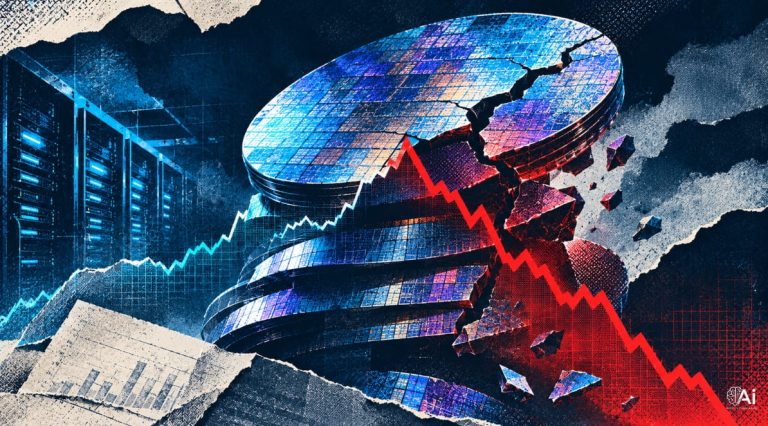

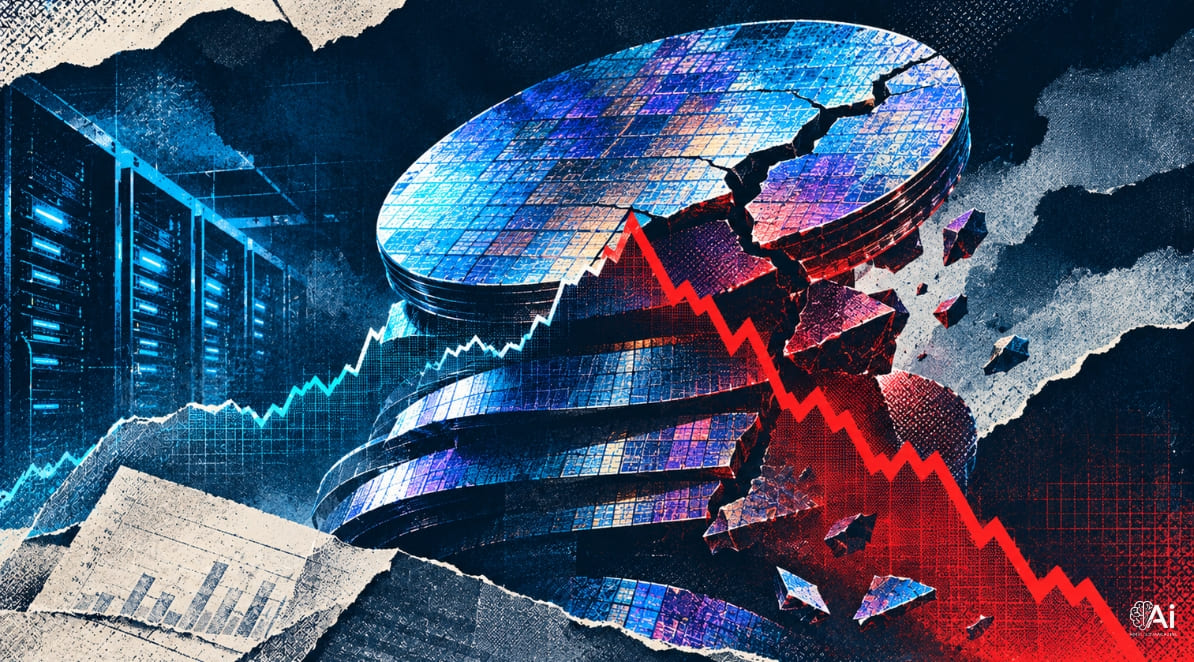
Leopold Aschenbrenner is a former OpenAI researcher who wrote “Situational Awareness”, a 2024 essay on the race to superintelligence, and runs the hedge fund named after it. Its disclosed US-listed holdings grew from $255m to $20.2bn in 18 months. Then, by his own account, the fund lost 67% in July 2026, and by September 30 they were down to $1.6bn.
At a glance
Leopold Aschenbrenner
Founder and managing partner of Situational Awareness LP, San Francisco
- Career
- FTX Future Fund (2022); OpenAI Superalignment team (2023 to 2024); his own fund since 2024
- Education
- Columbia University, mathematics-statistics and economics; valedictorian of the class of 2021
- Known for
- “Situational Awareness: The Decade Ahead”, a 165-page essay published in June 2024
- Early backers
- Patrick and John Collison, Daniel Gross and Nat Friedman
- Co-portfolio manager
- Carl Shulman, according to SEC filings
- Next filing
- Holdings on December 31, 2026, due in mid-February 2027
Who Is Leopold Aschenbrenner?
Aschenbrenner is an economist turned AI researcher turned investor. He grew up in Germany, where he placed fourth in the national Jugend forscht science fair, according to his LinkedIn profile. He then studied mathematics-statistics and economics at Columbia, where Columbia College named him valedictorian of its class of 2021.
As a student he also wrote a working paper on existential risk and economic growth for Oxford’s Global Priorities Institute. In 2022 he joined the FTX Future Fund, a grant-maker funded by Sam Bankman-Fried and his FTX colleagues. When FTX collapsed that November, he resigned with the rest of its team.
In 2023 he moved to OpenAI’s Superalignment team, which worked on keeping AI systems smarter than humans under control. He co-wrote its paper on weak-to-strong generalisation, which tested whether a weaker model can supervise a stronger one.
Why Was Leopold Aschenbrenner Fired From OpenAI?
OpenAI fired Aschenbrenner in April 2024 over what it described as a leak, according to his account and press reports. He says a security memo was a major reason. In his account, after a security incident he sent board members a memo calling OpenAI’s defences “egregiously insufficient” against theft of its model weights, and received an HR warning.
The leak, he says, was a document on safety and security that he shared with a few outside researchers. At the time, he adds, that was normal practice. OpenAI denies that his concerns played a part. “This did not lead to his separation,” a spokeswoman said in July 2024, in a statement quoted in a New York Times report. The company also said it disagreed with many of his claims about its work.
What Is “Situational Awareness”?
Situational Awareness is a 165-page essay series he published in June 2024, two months after leaving OpenAI. It argues that more computing power, better algorithms and “unhobbling”, freeing models to act as agents, make AI that can do an AI researcher’s job strikingly plausible by 2027. Superintelligence, it says, could follow soon after.
Much of it is about physical infrastructure. For example, Aschenbrenner projected training clusters of 10 gigawatts by 2028. By 2030, he wrote, a trillion-dollar cluster could draw 100 gigawatts, more than a fifth of US electricity output. He also argued that the US must guard its AI labs against Chinese espionage.
He also laid out the thesis the same day in a four-and-a-half-hour interview with Dwarkesh Patel. “AI is an industrial process,” he said. Asked why it matters that the clusters are in the US, he pointed to Gulf money and answered with a question of his own. “Would you do the Manhattan Project in the UAE?”
What Is Situational Awareness LP?
Situational Awareness LP is Aschenbrenner’s hedge fund, named after the essay, and it bets on the companies building AI’s physical infrastructure. He launched it in 2024 with anchor investments from Stripe’s Patrick Collison and John Collison, Daniel Gross and Nat Friedman. It has been an SEC-registered adviser since February 2025.
Aschenbrenner is managing partner and control person, and Carl Shulman is co-portfolio manager, according to the fund’s SEC filings. The firm is based in San Francisco.
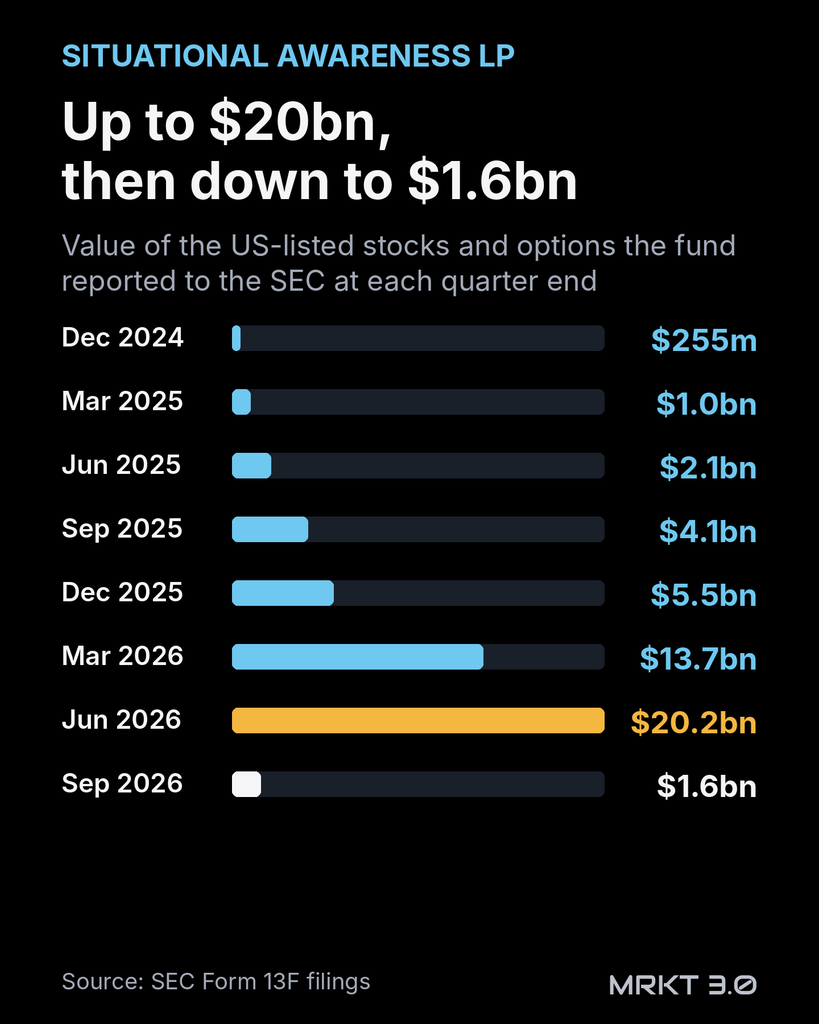
| Quarter end | Disclosed value | Companies |
|---|---|---|
| December 31, 2024 | $255 million | 6 |
| March 31, 2025 | $1.0 billion | 12 |
| June 30, 2025 | $2.1 billion | 9 |
| September 30, 2025 | $4.1 billion | 25 |
| December 31, 2025 | $5.5 billion | 25 |
| March 31, 2026 | $13.7 billion | 29 |
| June 30, 2026 | $20.2 billion | 24 |
| September 30, 2026 | $1.6 billion | 9 |
The figures come from its quarterly 13F filings, which list US-listed stocks and options at quarter-end prices. They leave out short sales, private stakes and borrowing. As a result, they measure the size of its bets, which can exceed the money investors put in. By June 2026 the disclosed book was 79 times its first filing.
What Did Aschenbrenner’s Fund Own?
Aschenbrenner’s fund owned power producers, bitcoin miners turned AI data-centre hosts, neoclouds and, by mid-2026, mostly memory chips. Its first filing, for December 2024, held six stocks, among them Marvell, Vistra, Vertiv, Talen Energy and Constellation Energy.
Then, through 2025, it added Core Scientific, IREN, Applied Digital and CoreWeave, the neoclouds and hosts renting out NVIDIA chips. By October 2025 it held 9.4% of Core Scientific. At the end of the year it also held call options covering $747 million of Intel shares. Our guide to CoreWeave’s debt explains why such companies borrow so heavily.
In early 2026 it sharply scaled up its bets against parts of the chip and AI trade. Of the $13.7 billion it disclosed for March 31, $8.5 billion was put options, measured by the value of the shares they covered. The largest were on a chip fund, NVIDIA, Oracle, Broadcom, AMD, Micron, TSMC and ASML. Puts pay off if prices fall, so they work as a bet or as a hedge.
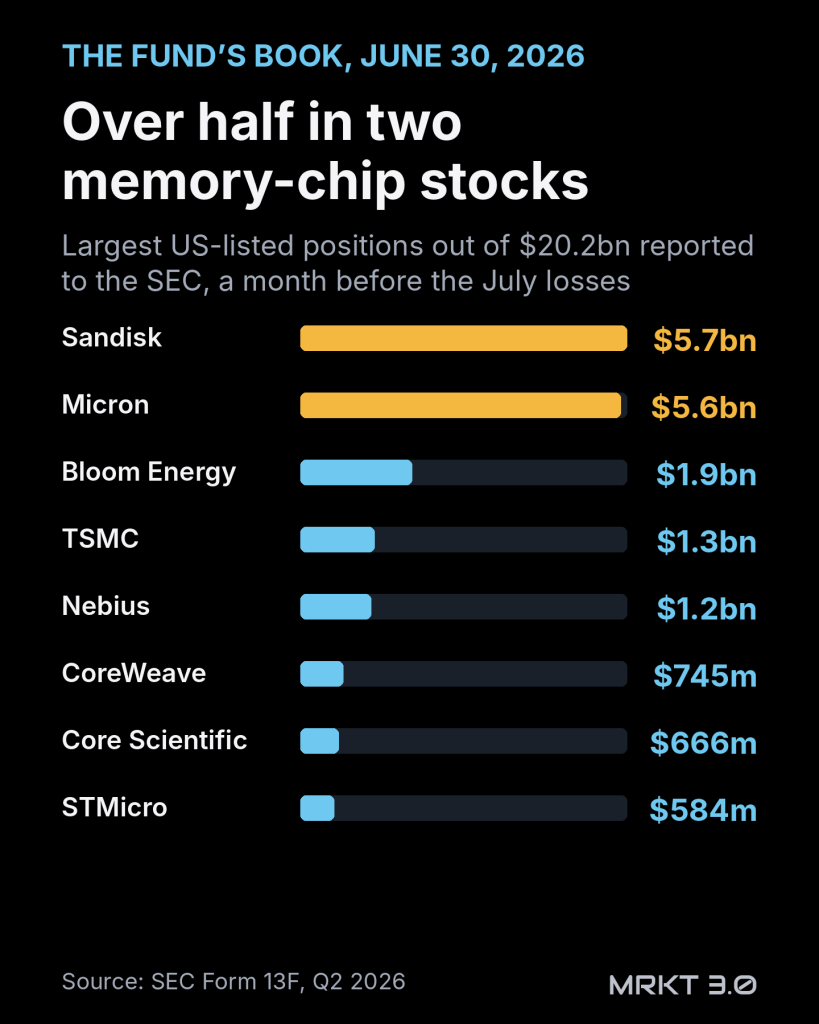
By June 30, though, the chip puts were gone. Sandisk and Micron, two memory-chip makers, made up 56% of the $20.2 billion book, ahead of Bloom Energy, TSMC and Nebius.
What Happened to Situational Awareness in July 2026?
Situational Awareness lost 67% in a month as AI chip stocks fell, then sold most of its public stocks and removed all its borrowing. The loss and the end of borrowing come from Aschenbrenner’s July 30 letter to investors, as quoted by Reuters. The same letter said the fund was still up 80% for 2026.
“We let you down this month,” he wrote. He compared the selling to “a bank run”, with losses forcing sales that caused more losses. Citadel, Ken Griffin’s firm, bought the bulk of the stock book, according to sources cited by Reuters.
Still, Citadel did not get everything. On August 3 the fund sold 11.5 million Core Scientific shares to unnamed buyers in two block trades, for about $226 million. Even so, it still held 4.4% of the company the next day.
Its private stakes also stayed. The largest is in Anthropic, which the Financial Times valued at about $5bn, according to The Next Web.
Anthropic has since filed to list on Nasdaq and is close to pricing its shares, so that stake could soon become a public holding.
Does Leopold Aschenbrenner Invest in Europe?
Aschenbrenner mostly invests in Europe through Nebius, the Amsterdam-based AI cloud company that grew out of Yandex. In May 2026 the fund disclosed a 5.6% stake, 12.4 million shares. By June 30 it had cut that to 4.5 million shares, worth $1.2 billion. Our explainer covers what Nebius does.
By June 30 it also held $584 million of STMicroelectronics, the Franco-Italian chipmaker, a new position that quarter. In March, it held put options covering $494 million of ASML shares. Nebius is also one of the biggest neocloud companies in our ranking.
By our reading, his view of where AI should be built would include Europe’s democracies. In the Dwarkesh interview he said the biggest clusters belong in the US and in allied democracies. Putting them in autocracies, he argued, creates an irreversible security risk.
What Does Aschenbrenner’s Fund Own Now?
Far less, and mostly options. Its filing for September 30, published on November 16, lists $1.6 billion of US-listed holdings, 92% less than in June. Call options make up $1.0 billion of that, measured by the value of the shares they cover.
| Holding, September 30, 2026 | Type | Value |
|---|---|---|
| SharonAI | Shares | $441 million |
| Bloom Energy | Call options | $389 million |
| Nebius | Call options | $333 million |
| Sandisk | Call options | $183 million |
| Roundhill memory-chip fund | Call options | $140 million |
| CleanSpark, IREN, Bitdeer, Fermi | Shares | $92 million |
As a result, the largest single holding is now SharonAI, an AI cloud company in which the fund already held close to 20% in the summer. Micron, TSMC, CoreWeave, Core Scientific and STMicroelectronics are gone from the list. The bets on memory chips, fuel cells and Nebius remain, but through options instead of shares.
These filings still leave out private stakes, short sales and any borrowing. The next one, for December 31, is due in mid-February 2027, and we will add it to this page and the data file when it appears.
Author: Akos Szima
See Also:
Who Is Michael Intrator? The CoreWeave CEO Who Has Sold $975m of Its Stock
What Is Nebius? The AI Cloud Now Worth More Than CoreWeave
How Much Debt Does CoreWeave Have? $46.9bn, Up a Third in Three Months
How We Checked This:
Holdings come from the fund’s eight 13F filings, read directly from the SEC’s XML tables. Values are at quarter-end prices, and options are shown at the value of the underlying shares, as the SEC requires. Stakes come from Schedules 13D and 13G and a Form 3. The Core Scientific trades are in Exhibit 99.2 of the August 4, 2026 filing. July performance comes from the fund’s letter as quoted by Reuters; the fund has not published audited returns. The September 30 figures are from the November 16, 2026 filing. Download every position, with sources (CSV).
Change log: November 12, 2026, first published. November 18, 2026, added the September 30, 2026 holdings.
Frequently Asked Questions:
A German-born former OpenAI researcher. He wrote the 2024 essay Situational Awareness and runs Situational Awareness LP, an AI-focused hedge fund in San Francisco.
The fund lost 67% in July 2026 as AI chip stocks fell, according to its letter to investors. It sold most of its public stocks to Citadel, removed its borrowing and kept its private stakes, including Anthropic.
On September 30, 2026 it disclosed $1.6 billion of US-listed holdings, down from $20.2 billion in June. The largest were SharonAI shares and call options on Bloom Energy and Nebius.
This article is for information only and is not investment advice.