
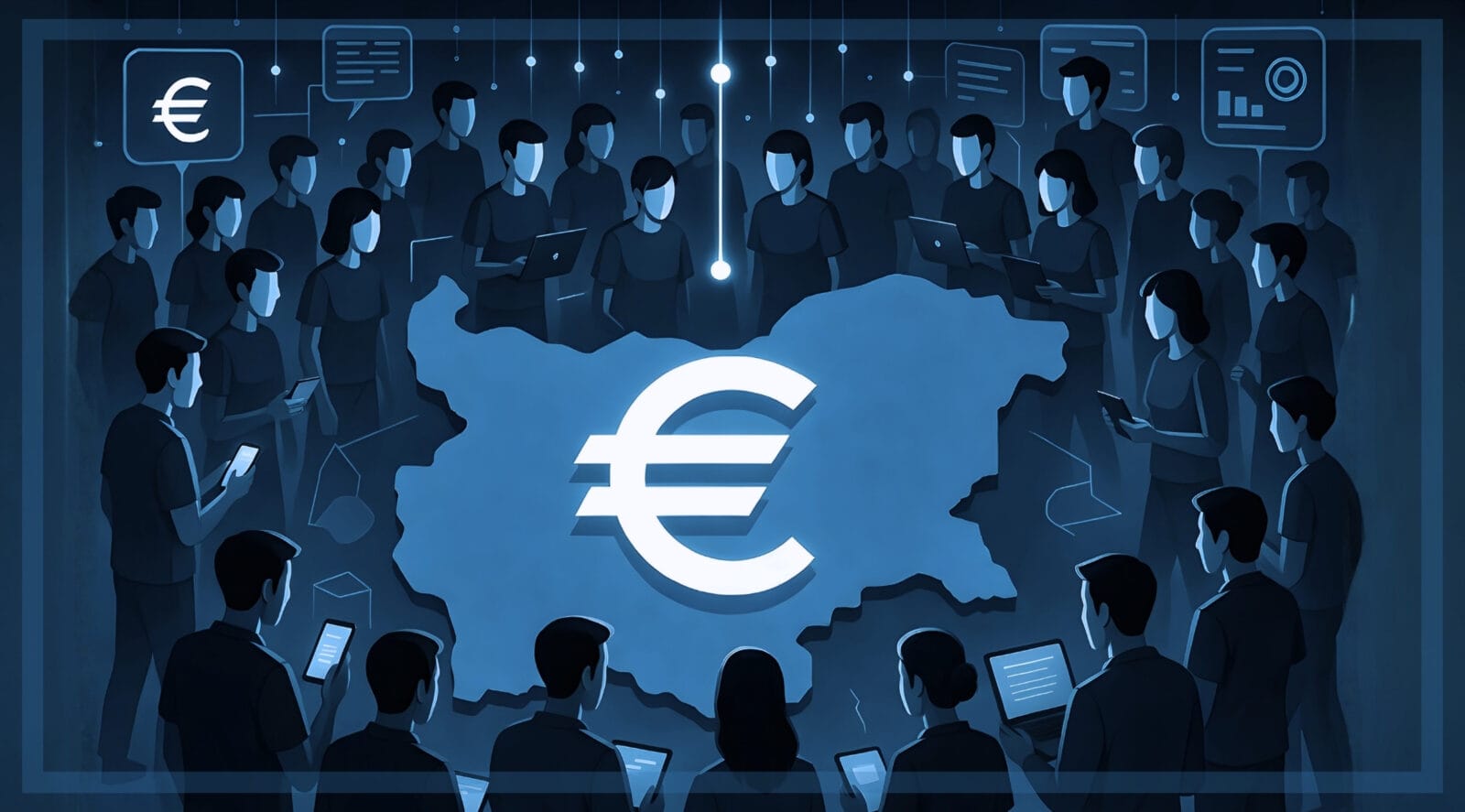
Bulgaria’s eurozone entry in 2026 may prove to be more than a monetary shift. For a generation shaped by emigration and economic uncertainty, it offers a renewed reason to return. As stability improves and the technology sector expands, young Bulgarians are beginning to view the country not as a place to leave, but as one to build. In a country where Baba Vanga’s prophecies still resonate, the return of young talent alongside advances in artificial intelligence has sparked questions about whether folklore is aligning with reality. That convergence has given Bulgaria’s cautious reinvention an unexpected sense of continuity.
Once a central electronics hub of the Soviet bloc, Bulgaria has spent decades navigating post communist transition. The result is not a sharp transformation, but a steady evolution. Technical legacy, closer EU integration and the return of younger talent are now shaping the country’s trajectory.
This “middle path” avoids extremes, channeling historical strengths into sustainable growth. But what drives this resurgence? Euro adoption, returning talent, and demographic change are doing the heavy lifting, while symbolism gives the moment meaning. For some, it feels almost foretold.
Balancing Bulgaria’s Economic Gains with Political Hurdles
Bulgaria’s euro adoption on January 1, 2026, promises deeper EU integration and economic credibility, but arrives against a backdrop of political crisis, inflation fears, and foreign meddling.
Maria Simeonova, Head of the Sofia Office of the European Council on Foreign Relations, highlights the upside: “Becoming part of the decision making process of the European Central Bank, there will be more credibility in the Bulgarian economy, with the hope that this will lead to higher investments.” She emphasized that although the country has been on a positive trend, it needs more sustainability, which additional investment will provide.
Membership also anchors Bulgaria geopolitically, shielding it from foreign influences while boosting trade and investment in the EU’s single market. Yet challenges loom; public opinion remains sharply divided, with many fearing price hikes in the bloc’s poorest member state.
Frustrations rose to a boiling point in December 2025, after anti-corruption protests toppled the government. This has led to an election likely to be held in spring 2026, marking the eighth election since April 2021. Despite this volatility, Simeonova maintains that the cycle of elections should not be interpreted as political collapse. Instead, she frames it as a mechanism of democratic accountability aimed at dismantling entrenched corruption.
The Homecoming: Youth Fueling Bulgaria’s Tech Rise
Amid this push for democratic accountability, young citizens and the returning diaspora are at the forefront, demanding resilient institutions to combat Bulgaria’s entrenched corruption. This momentum dovetails with a larger homecoming wave, as eurozone membership enhances economic confidence in 2026 and sparks a quiet migration reversal. Young Bulgarians from abroad are returning in increasing numbers, lured by burgeoning tech opportunities in Sofia.
Euro adoption removes currency barriers, attracts foreign investment and signals stability, making Bulgaria more appealing to skilled professionals who once left for Western Europe or further afield. Combined with EU funded initiatives and a vibrant startup ecosystem, this has created a stronger pull factor than at any point in the past two decades.
In 2025, Bulgaria saw over 52,000 arrivals outpacing departures for the first time in decades, including nearly 18,000 returning citizens, a trend expected to contribute to population growth in 2026. Prime Minister Rosen Zhelyazkov has actively urged the diaspora to return, emphasizing the need for global skills to drive change. Recent data from 2024 shows 13,000 new immigrants (excluding EU citizens), up 8.1% from 2023, with initiatives like a digital nomad visa introduced in mid-2025 facilitating remote workers and freelancers.
Sofia sits at the centre of this shift. Once a Soviet era computing hub, the city now hosts INSAIT, one of Europe’s leading AI research institutes. Looking ahead into 2026, Sofia Tech Park was selected for a ninety million euro EU funded AI factory project due to launch in 2026. The BRAIN + + initiative includes a new generation supercomputer and dedicated hubs for startups, positioning Bulgaria as a regional AI player in fields such as robotics and healthcare.
Many returnees working in technology, engineering, and entrepreneurship are injecting global experience into this growth. Government programmes under the 2021–2025 Migration Strategy encourage repatriation through targeted incentives, while networks such as Tuk Tam connect diaspora talent with domestic employers. Although brain drain remains a challenge, recent trends point to modest brain gain, echoing developments seen in Croatia and Romania following EU accession.
Folklore Meets Innovation: Baba Vanga’s “Golden Generation”
Adding a layer of mysticism to Bulgaria’s eurozone push is the legacy of Baba Vanga, the country’s blind seer who died in 1996 and whose visions have long captivated the nation with their mix of forewarning and hope. Among her lesser known prophecies is one that appears newly relevant to 2026: the emergence of a “golden generation” of so called crystal children who would shape Bulgaria’s future.
These crystal children, born roughly between 2002 and 2006, were foretold as incorruptible beacons immune to the greed and power grabs that plagued prior generations. According to accounts, Vanga explained that they “will study abroad and become doctors, mathematicians, musicians, teachers and physicists. They will return to Bulgaria and through their knowledge they will lead it forward.”
While the prophecy makes no mention of technology, artificial intelligence, or euro adoption, its emphasis on science and mathematics aligns closely with Bulgaria’s current trajectory. As eurozone membership stabilises the economy and Sofia expands its role as a technology hub, some Bulgarians see parallels between returning young professionals and Vanga’s vision.
Sceptics dismiss the narrative as folklore applied retrospectively to modern developments, while others see it as a symbolic reflection of a genuine shift, as internationally educated Bulgarians return home to work in science, engineering and technology.
Is Baba’s Prophecy Real? Bulgaria’s Tech Future in 2026
At the crossroads of Europe, Bulgaria is entering a period of recalibration rather than reinvention. Eurozone membership, technological investment and the gradual return of a younger generation are aligning at a moment that has eluded the country for decades. What is taking shape is not a dramatic turnaround, but a more durable foundation built on stability, skills and long deferred confidence.
Whether Baba Vanga’s prophecies anticipated this moment or simply offer a cultural frame through which it is now interpreted is ultimately secondary. What matters is the substance beneath the symbolism. As euro adoption anchors the economy and returning professionals reshape the labour market, Bulgaria is testing whether institutional reform and human capital can finally reinforce one another. In 2026, the country’s future appears less defined by who leaves, and increasingly by who chooses to come back.
Author: Grace Sharp
See Also:
From Stress to Success: How AI Enhances Workplace Well-Being