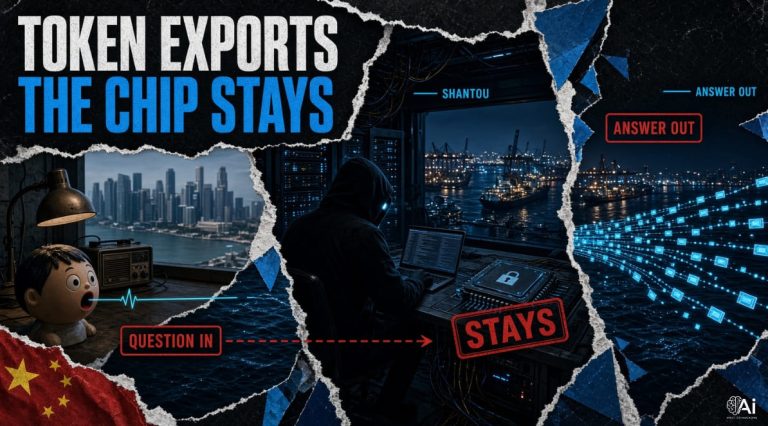

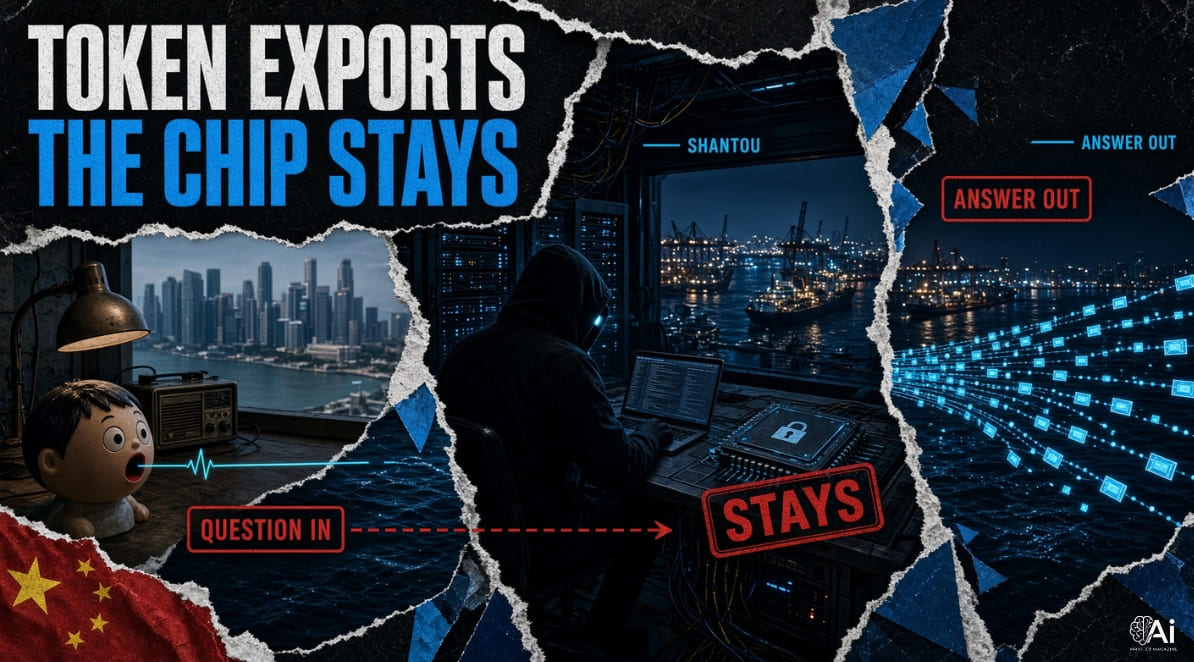
Shantou is selling the use of its AI computers to customers overseas, and it is not selling the computers. A firm abroad sends a question in. A machine in the city writes the answer. The answer goes back. The machine stays where it is. The city calls that a “token export”.
Rao Shaoyang, of China Telecom‘s research institute, described the same shift in June. “In the past, China’s digital industries went overseas through apps, software or complete systems. Token exports allow overseas customers to directly call the inference capability, interface capability and intelligent services of Chinese models.” Liu Xiaoge, of the State Council’s Development Research Center, called it “a completely new form of digital services trade.”
This is what that trade looks like in the port city of Shantou.
What Is a Token Export?
A token is the small piece of text a model actually counts. For example, “where is my order?” is six tokens. The reply, “it shipped this morning and arrives Thursday,” could be about ten. The buyer pays for both. Inference is the work of producing that answer, rather than the long job of training the model. A token export is a sale of the answer, with the buyer overseas and the machine in Shantou, so no chip and no server crosses a border.
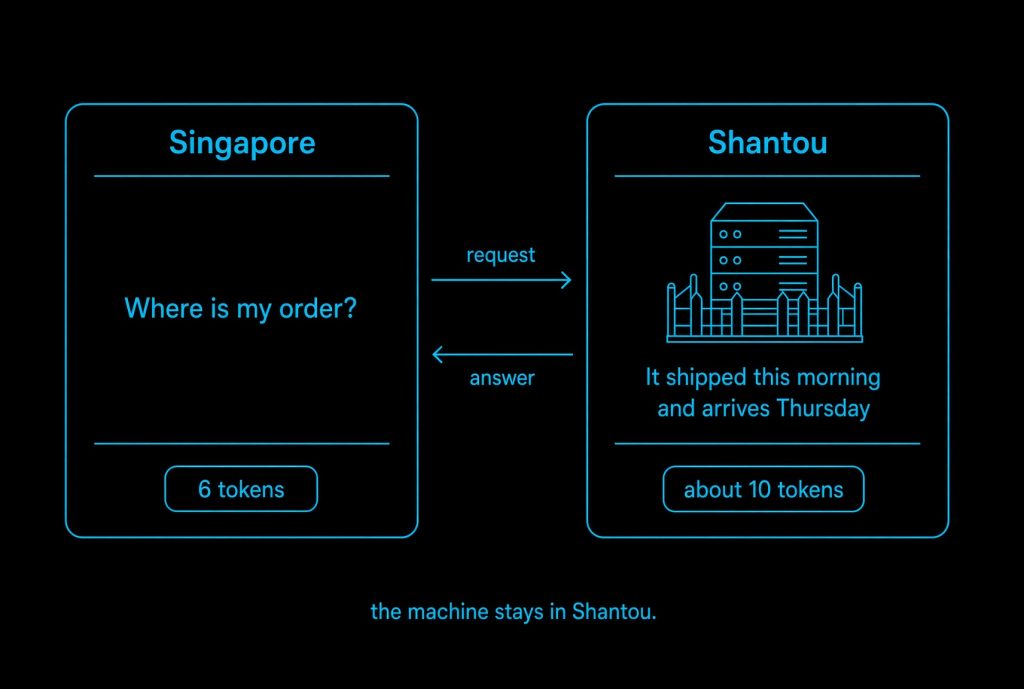
Shantou city ran the full path in late April. A request comes in from abroad on a dedicated line, the model in the zone does the work, and only the result travels out. Officials call the setup inbound data processing. The zone is kept off China’s public internet, and the city says the original request is not kept once the answer has been sent.
Why Shantou?
Beijing approved the pilot for Shantou in April 2025, after Hainan, and the zone says more than 130 companies have since passed its checks.
Shantou already sells a lot of ordinary goods abroad, and Chenghai, one of its districts, is a centre of the plastic-toy trade, which is why the first AI product on the scheme is a toy that can talk. The city also lands a large share of the undersea cables that leave mainland China, including lines to Southeast Asia that have been there since the late 1990s.
Hong Zhebin, who runs the cable landing station for China Telecom in Shantou, said the delay to Singapore is “only 32.7 milliseconds, quicker than the blink of an eye.” A new cable landing of that size takes years.
The zone has two other claims that are harder to check from outside. It points to 60 gigawatts of offshore wind, and says that keeps the power behind a token cheap against a sale price of a few dollars per million tokens. It also points to the Chaoshan diaspora, more than 15 million people with family ties to the region, and says it has opened liaison offices in more than ten countries.
What Is Actually Being Sold?
The zone told a reporter it sends about 65 billion tokens a day, that overseas demand is about 3 trillion a day, and that this demand is rising about 70 percent a year. In June the daily use was described as having risen from 100 million tokens to the tens of billions within a month of the April test.
The calls the firms describe come mainly from Singapore, Thailand, Malaysia and Indonesia, for coding help, short video and ordinary shop tasks. Officials describe these as the easy cases, because a toy script or a product description is not a state secret. On September 24 the zone announced subsidies for the same uses, including AI toys and short dramas.
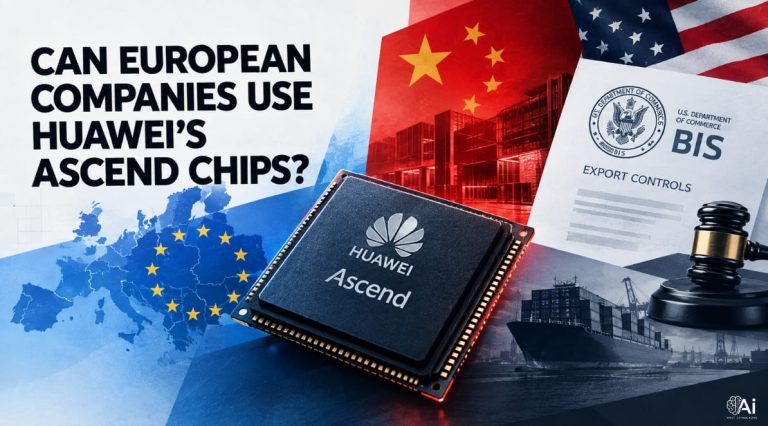
In Shantou, the lane runs through the three phone carriers. China Mobile operates the Eastern Guangdong data centre, China Telecom lands the cables, and on September 24 the international arms of Mobile, Telecom and China Unicom switched on a shared pool for overseas calls. Inspur has an AI factory in the zone. Tianyima, the listed computing firm, signed with Huawei to put an Ascend 950 cluster there, the same chips covered in the Ascend explainer.
Nationally, the carriers are selling token bundles the way they sell phone plans, from 9.9 yuan a month. Alibaba has set up a token-hub unit. The models being called are the familiar open ones, DeepSeek, Qwen, MiniMax and Moonshot. A separate inland bet is Qingyang, in Gansu, where China Energy Engineering, Kingsoft Cloud and Chindata are building the power-and-server side. Shantou is the one with the cable.
Where This Sits Next to the Chip Rules
US export controls, including the MATCH Act push on tools from ASML, start from a simple idea. If China cannot get the machines, the work slows down. A token export does not ship the machine. Washington has already started treating remote use of a controlled chip as its own question, which is what the Cloud Security Act is aimed at. Shantou is the mirror case. The computer stays inside China, and the customer abroad pays for the answer.
Whether that stays a service for toy makers and shops in Southeast Asia, or becomes a large enough trade to matter to the chip rules, is not settled by the September figures. Those figures are the zone’s.
Author: Grace Sharp
See Also:
The Cloud Security Act Explained: What It Means for ASML and Europe
US Claims ASML EUV Machine in China: ASML Says Impossible
What Is Huawei Ascend? The CUDA-Free AI Stack, Explained
Frequently Asked Questions:
A token export is a sale of an AI answer. The buyer is overseas and the machine that writes the reply stays in Shantou, so no chip and no server crosses a border.
A token is the small piece of text a model counts. “Where is my order?” could be six tokens. A reply such as “It shipped this morning and arrives Thursday” is about ten, and the buyer pays for both.
A request comes in from abroad on a dedicated line, the model in a marked-off zone does the work, and only the result travels back. Officials call this inbound data processing. The zone is kept off China’s public internet, and the city says the original request is not kept once the answer has been sent.
The chip never leaves China, so a rule written for shipping hardware does not catch the box. Washington has already started treating remote use of a controlled chip as its own question. A token export is the mirror case, with the computer inside China and the customer abroad paying for the answer.
China Mobile, China Telecom and China Unicom run the lane. Inspur has an AI factory in the zone, and Tianyima has signed with Huawei to put an Ascend 950 cluster there. The calls the firms describe come mainly from Singapore, Thailand, Malaysia and Indonesia.