
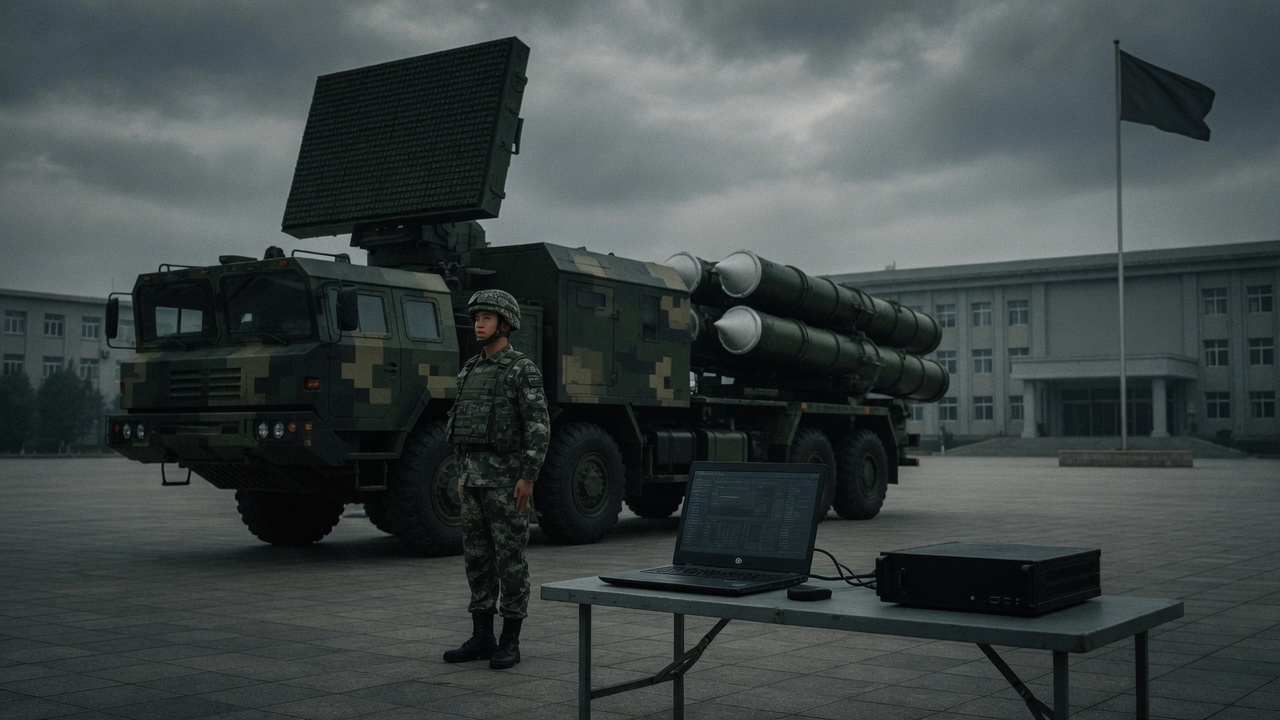
Washington spent years building a wall around advanced chips to slow China’s military AI. This week we learned the wall has a door, and it was never locked.
A Reuters review of more than 80 Chinese academic papers and patents found military and security-linked institutions using outputs from OpenAI and Anthropic models to train their own defence systems. The method is AI distillation, and it makes the chip embargo look like a lock on the wrong gate.
How Does Distillation Beat the Chip Embargo?
Distillation feeds the outputs of a powerful model into a smaller, specialised one that runs locally, without the enormous compute needed to build a frontier model from scratch. No ASML machines, no NVIDIA stockpile, no sanctions to breach. You query a model that is already trained and let it teach yours. Research compiled by the Jamestown Foundation and shared with Reuters points to work by institutions linked to the People’s Liberation Army, and it surfaces days before US and Chinese officials sit down on AI governance.
Can Export Controls Even Touch AI Distillation?
Distillation is not exotic or illegal. It is standard industry practice, and every serious lab does it. Beijing’s line is that the United States is chasing AI hegemony and that American firms extract from each other the same way. That defence is not nonsense, which is why the story matters. If the workaround is this ordinary, the whole logic of hardware export controls has a hole in it that no BIS rule currently plugs.
Europe should not feel smug. Mistral sits in the same model tier as the two US labs named here, much of its output is open, and the EU AI Act’s model-theft provisions were written for a threat that looks nothing like a polite API call.

See Also:
MATCH Act Explained: The US Ban on ASML’s China Chip Tools
Is China Building Its Own ASML? The Firm That Triggered the Sell-Off
What Is Yuanjiwei, the Chinese Startup Promising 5nm Chips Without EUV?