

As artificial intelligence transforms economies at a rapid pace, Dublin is positioning itself as one of Europe’s most promising AI hubs. Drawing on Ireland’s mature technology sector and its strong performance on the top of the IMF Skill Readiness Index, the city is well placed to develop the skilled workforce needed to thrive in an AI-driven era.
Ireland began preparing for this shift early.
The country introduced its national AI strategy in July 2021, more than a year before the launch of OpenAI’s ChatGPT. Recent data from Trinity Business School shows that AI adoption among Irish businesses has risen to 91%, up from 49% in 2024. Projections indicate that AI could add at least €250 billion to the Irish economy by 2035.
Startup activity reflects this trend. According to a recent AWS report, 63% of Irish startups now use AI, with 36 % placing the technology at the centre of their business models. This compares with a European average of 29%.
Dublin’s AI Transformation: From Tax Haven to Tech Hub
Dublin’s transformation into an AI hotspot builds on its long-standing success as a preferred European headquarters for multinational technology companies.
For decades, global giants have chosen Ireland for its competitive 12.5% corporate tax rate, access to the EU single market, and well-connected business network.
In 1980, Apple opened its first European manufacturing facility in Cork, creating thousands of jobs and demonstrating confidence in Ireland as a European base. Intel and other firms followed, drawn by favourable tax policies and access to the European single market.
By the early 2000s, Google, Meta, Amazon, and Microsoft had all located their European headquarters in Dublin. Ireland now hosts 16 of the world’s top 20 technology multinationals. These companies initially focused on operations and support, but they also created a substantial talent pipeline. Many engineers and specialists trained in these organisations later moved into startups or founded their own ventures.
Dublin’s rise as a leading AI hub rests on several structural advantages. Trinity College Dublin and University College Dublin have significantly strengthened their programmes in machine learning, data science, and AI ethics, supplying the industry with a steady flow of well-qualified graduates.
At the same time, state agencies such as IDA Ireland have worked to attract international investment through tailored incentive packages aimed at AI and technology firms. The departure of the UK from the EU has also worked in Dublin’s favour, prompting many companies to establish or expand their European operations in Ireland to maintain seamless access to the single market.
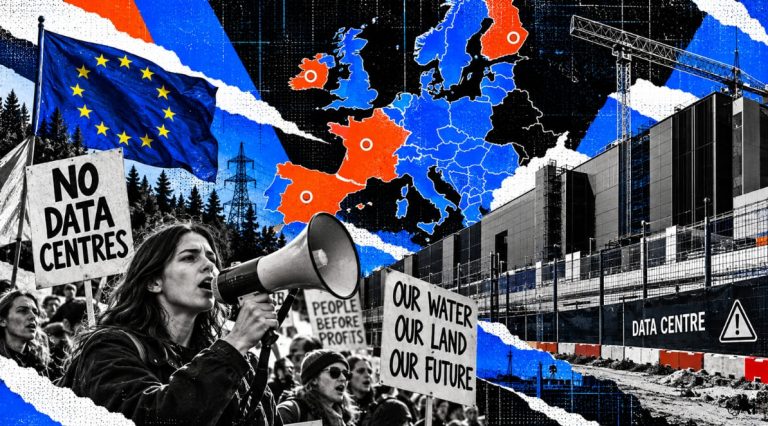
Complementing these strengths is the city’s modern digital infrastructure, including advanced data centres and high-speed connectivity, which provides the critical foundation needed to develop and deploy large AI systems.
Anthropic’s Expansion Puts Dublin at the Centre of a Transatlantic AI Divide
Anthropic’s decision to significantly expand its operations in Dublin is reinforcing the Irish capital’s status as a fast-rising AI hotspot. The AI company announced earlier this month that it will create 200 new jobs in the city and upgrade its Dublin office to serve as its EMEA headquarters.
Founded in 2021 and now valued at up to $80 billion, Anthropic has built its reputation on a safety-first approach to AI. The company described the expansion as a pivotal step for AI adoption across Europe, with the Dublin office expected to play a central role in managing regulatory compliance.
Anthropic joins several other major technology firms that are rapidly scaling their AI operations in Dublin, including OpenAI, Microsoft, Google, Meta, Workday, and Qualcomm.
The move has also highlighted growing tensions between the United States and the European Union over AI governance. Anthropic’s restrictive policies, particularly its refusal to allow use of its technology for certain government surveillance and military applications such as autonomous weapons, have drawn sharp criticism from the Trump administration and some US investors. This escalating situation led to Anthropic being labelled a supply-chain risk by the Pentagon (a move later subject to court challenges). This has placed the company at the centre of a wider debate about safety, regulation, and control in AI development.
EU Regulation and Its Impact on AI Startups and Expansion in Dublin
Dublin’s growing appeal for AI companies is closely linked to its position within the European Union and its role in implementing the EU AI Act. As the bloc’s most significant new AI regulation enters its implementation phase, companies operating from Dublin are able to build compliance into their operations from an early stage.
The EU AI Act introduces a risk-based framework that classifies AI systems according to their potential impact, with stricter rules for high-risk applications in areas such as healthcare, law enforcement, and critical infrastructure.
For AI startups, this regulatory clarity can be a double-edged sword. While some view the EU AI Act as burdensome and costly, others see it as a competitive advantage. Dublin-based startups that master compliance early can more easily access the European market of 450 million consumers and build products that meet global standards.
Several local AI companies have already begun integrating transparency, documentation, and risk assessment requirements into their development processes.
This environment has encouraged both global giants and smaller startups to expand in Dublin. By locating in the Irish capital, companies gain direct access to EU regulatory expertise while remaining part of an English-speaking, tech-savvy ecosystem with strong links to the United States.
As a result, Dublin is increasingly viewed as a strategic bridge between American innovation and European regulatory requirements.
As major AI players continue to concentrate their European operations in the Dublin Docklands, the city finds itself not only at the heart of Europe’s AI growth story but also on the frontline of a broader transatlantic contest over how AI should be developed and governed.
Who Are Ireland’s AI Unicorns?
Beyond the arrival of global technology giants, Dublin’s AI ecosystem is also producing its own success stories. A new wave of Irish-founded companies are developing innovative solutions that are attracting international attention.
One prime example is SoapBox Labs. The company created a specialised AI voice recognition system designed specifically for children to help improve early literacy through natural conversation. In 2023, SoapBox Labs was acquired by US edtech leader Curriculum Associates, with its Dublin team now serving as the acquirer’s dedicated AI research and development hub.
Even more established Irish companies are heavily investing in AI. Intercom, the customer engagement software firm that achieved unicorn status in 2018, has committed nearly €90 million to integrate AI across its platform. The investment is creating dozens of new research and development roles as the company works to make sales, marketing, and customer support far more intelligent and efficient.
Dogpatch Labs, located in Dublin’s Digital Docklands (Silicon Docks), is Ireland’s leading startup hub and a major driver of the city’s AI growth. Home to hundreds of early-stage companies and founders, it offers coworking space, accelerators (including the NDRC), mentorship, and events that help turn ideas into scalable ventures. It plays a pivotal role through its partnership with OpenAI for Ireland, delivering practical AI workshops, hands-on training, and expert mentorship to help SMEs and early-stage founders integrate advanced AI tools into their products and workflows.
Specialised research centres including CeADAR, ADAPT, INSIGHT, Lero, and EMPOWER provide additional research capacity.
Beyond the Boom: Irish AI Startups Making Their Mark
Dublin didn’t choose to become a battleground. It became one by being too useful to ignore; to Silicon Valley, to Brussels, and now to the companies caught between them.
As the EU AI Act moves toward full implementation and Washington’s frustration with overly restrictive safety-first approaches continues to harden, the decisions being made in Dublin’s Docklands will carry weight well beyond Ireland. The city isn’t just hosting Europe’s AI industry. It’s hosting the argument about what that industry is allowed to become.
Author: Ruben McCarthy
See Also:
Anthropic Defies Pentagon: Trump Bans Claude in Military Dispute