
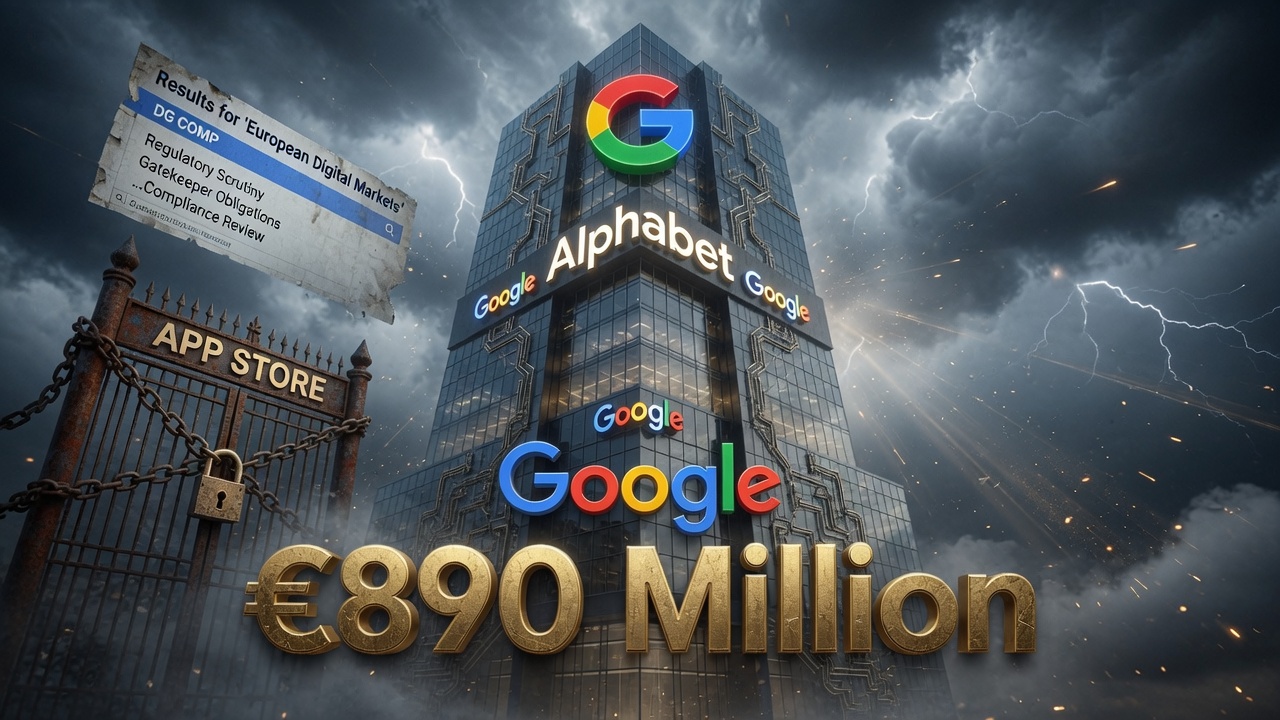
In under a year Brussels has fined Google twice and beaten it in court once, and Google has absorbed all three without breaking stride. Its first Digital Markets Act (DMA) penalty, €890 million on July 23, will be no different.
What Did the Commission Actually Decide?
Google is the main operating company of Alphabet, the parent group created in 2015. Alphabet owns Google (Search, Play Store, Android, YouTube, etc) along with a handful of other bets. When the EU fines “Google,” the bill ultimately sits with Alphabet.
That parent company is now facing its first penalty under the DMA, the EU’s strict rulebook for the biggest tech platforms, known as “gatekeepers.” Once designated, these companies must follow a list of do’s and don’ts designed to stop them favouring their own services or locking in users and developers.
On July 23, the Commission found Google had broken two of those rules:
- €460 million for systematically ranking its own shopping, hotel, flights and transport results higher than rival comparison sites in Google Search.
- €430 million for stopping app developers on Google Play from telling users about cheaper ways to pay or download outside the Play Store (known as “anti-steering”).
Both obligations have been binding since the DMA fully applied in March 2024. The investigation began that same month. Google has already tested some Search changes; the Commission calls them progress but not yet compliance. Google says it is reviewing the decision and may appeal.
Why the €890 Million Barely Matters
For a company Alphabet’s size, €890 million is likely an inconvenience at best. Brussels could have gone to 10% of global turnover and did not. The real teeth are the 60-day deadline and the daily fines that kick in if Google fails to comply.
What Brussels actually wants is simple. Google Shopping, Flights and Hotels must sit on the same footing as Booking.com or Skyscanner. Developers must be free to point users to cheaper offers outside the Play Store. That is the opening the DMA was written to give Europe’s own challengers, from regional startups to AI labs like Mistral. Whether the behaviour actually changes is the only figure worth watching.
Is Google Losing the Ruling but Winning the Argument?
Google’s response is the tell.
Rather than fight the law clause by clause, it argues the DMA is breaking products Europeans like, stripping real-time prices for hotels and flights and weakening Play Store safety. And, there is a case for this argument. Forced neutrality can make a results page less useful, and some compliance changes have already dulled the experience.
But, the idea that ‘we made it worse in order to comply’ is more of a political line and less of a legal defence. It lands conveniently as Washington readies fresh tariffs and accuses Brussels of singling out American firms. The DMA was sold as faster enforcement than the decade-long Google Shopping case. On the evidence of a fine that reheats the very same self-preferencing theory, “faster” is doing a lot of work.

See Also:
The Cloud Security Act Explained: What It Means for ASML and Europe
MATCH Act Explained: The US Ban on ASML’s China Chip Tools
The Chip Security Act Explained: Will US Chips Come to Europe With a Tracking Device?