

SpaceX joined Nasdaq in June. Anthropic and OpenAI have both filed paperwork to go public. When OpenAI and Anthropic will go public is still unknown. What’s clear is that, like SpaceX, these IPOs are going to make the founders, angel investors, and employees of these companies extremely wealthy. Part of that wealth may go to turbo-charge the nonprofit world. Who benefits and who doesn’t is an open question.
This wave of potential philanthropy has been coined the “funding anthropalypse” by Jack Lewars, the founder of Ultra Philanthropy, an advisory organization that helps donors and foundations maximize the real-world impact of their donations. It’s estimated that over $37 billion could be in play after these AI companies go public and the insiders’ lock-up periods expire.
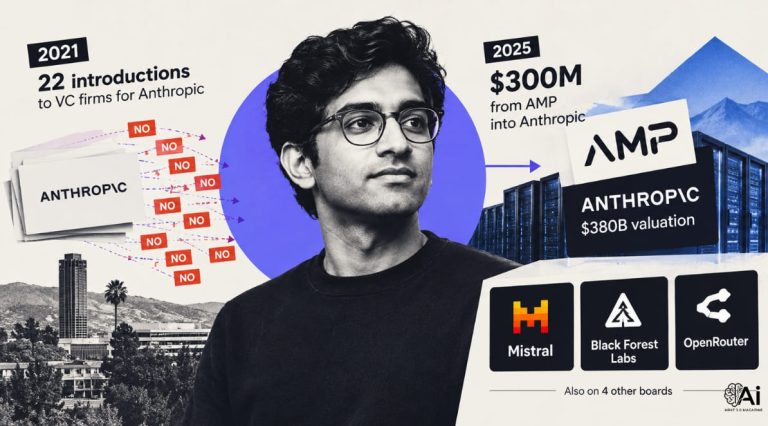
Presently, there’s a mad dash among nonprofits to secure funding from this soon-to-arrive cash cow. However, the money isn’t expected to flow evenly from the newly rich tech titans. Anthropic, for its part, has incentivised employees to donate and offered 3:1 and 1:1 matching for shares donated into a Donor-Advised Fund (DAF), whereas OpenAI doesn’t offer matching shares.
The $18 Trillion Guilt Trip
In the lead-up to these IPOs, part of the conversation has focused on the unprecedented level of wealth they will create. In 2025, billionaire wealth jumped 16% to $18.3 trillion. Given this statistic, all seven of Anthropic’s cofounders have pledged to give away 80% of their wealth, citing that income inequality at present levels could destabilize society.
Where exactly that money goes is the question. Competing causes, methodologies, and self-serving ideologies are at work.
Calls for charitable giving used to be more direct and immediate. Save the Whales and Feed the Children are both fairly self-explanatory imperatives. Nowadays, philanthropy has taken on increasingly technocratic overtones.
The Philosophy That Survived Its Poster Boy
The term “effective altruism” (EA), originated by academics at Oxford, first entered public consciousness in the wake of Sam Bankman-Fried’s fall from grace, subsequent arrest, and trial. Bankman-Fried, a prominent vocal proponent of effective altruism and longtermism, argued that it was best to make as much money as possible so that he could be more effective as a philanthropist.
Or more accurately, Bankman-Fried parroted this idea after hearing it from William MacAskill, one of the two Oxford philosophers who founded the effective altruism movement. It was MacAskill, when Bankman-Fried was studying physics at MIT, who convinced the FTX founder to pursue a high-paying job in finance after graduation.
While Bankman-Fried’s arrest and imprisonment briefly tainted the image of effective altruism, it never really went away. It remains popular in academic circles in England and increasingly in Silicon Valley.
Silicon Valley Wants to Save the World From Silicon Valley
The basic idea of effective altruism is to maximize the positive impact you can have as a philanthropist by using reason, evidence, and impartiality to address society’s most pressing needs. Initially, this meant addressing global health and poverty. In practical terms, it manifested in projects like distributing insecticide-treated bed nets to prevent malaria.
But, in the past few years, the consensus opinion regarding what society’s most pressing needs are has greatly shifted. Effective altruists now see AI safety, AGI risk, extinction, and long-term future risks as the most important concerns.
This shift coincides with the ethics of an intermingling philosophical movement, longtermism. Longtermism, preached by the likes of Elon Musk, argues that the future of the human race is more important than problems here on Earth now. Longtermism itself has intermingled with AI doomerism, adherents of which believe sentient AI will destroy humanity.
In the UK, under former Prime Minister Rishi Sunak, talking points from these ideologies prompted a shift in policy. In Silicon Valley, more and more of effective altruists are focused on the AGI extinction risks associated with the very technology that is making its adherents into billionaires.
Philanthropy or R&D Write-Off?
Effective altruists shifting towards AI safety and long-term considerations, while ignoring present-day real-world needs, shouldn’t be all that surprising. The tech sector’s cumulative wealth has tripled in the last eleven years, and held the dominant position in the stock market for the past decade.
AI billionaires donating billions to nonprofits that study long-term risks associated with AI seems as much an R&D investment as it does philanthropy. And yet, that seems to be where a lot of tax-deductible donations are likely headed.
The Ideas are European, But the Money is American
In 2005, Swedish-born philosopher Nick Bostrom founded the Future of Humanity Institute, a research center within Oxford that operated until the university shut it down in April 2024. Bostrom coined the phrase existential risk, ideas of which are often parroted by American big tech.
Toby Ord was a senior research fellow at the Future of Humanity Institute. Along with William MacAskill, he developed and proselytized effective altruism. In 2017, they coined longtermism, which builds on previous work done by Bostrom.
The ideology born out of Oxford is all over Silicon Valley. Bostrom is a favorite thinker of Musk and Altman, among others. MacAskill’s book on longtermism was praised by Musk as well. Whether these ideas have been co-opted to provide an intellectual shield for big tech’s self-interest is a point of contention.
What is clear is that the flood of money soon to enter the nonprofit sector could largely stay in the U.S. and even more specifically in the San Francisco area. Some European entities, like the European Center for Not-for-Profit Law (ECNL), are trying to put overlooked organizations in front of Silicon Valley money.
But it’s unclear how much currency European nonprofits or nonprofits focused on the Global South will have with the new batch of Silicon Valley philanthropists. European organizations are competing with not just American nonprofits, but also with an ideology that devalues charitable work that isn’t within its agenda.
Although European in origin, effective altruism and longtermism increasingly encourage American big tech to prioritize American big tech, even when giving to charity.
The Bay Area Gives to the Bay Area
The irony writes itself. Two Oxford philosophers built a framework for doing the most good with every charitable dollar, and Silicon Valley absorbed it, refashioned it, and pointed it back at Silicon Valley. When the lock-up periods expire and the $37 billion starts moving, the safest bet is that most of it lands within fifty miles of where it was made, funding researchers who study the risks of the very products that generated the fortune.
European nonprofits, and the causes effective altruism once championed, from malaria nets to clean water, will be pitching donors who have been taught that the highest form of charity is protecting a hypothetical future. The anthropalypse is coming. Whether it reaches beyond the Bay Area is a question the new philanthropists have already answered, whether they admit it or not.
Author: Tim Tolka, Senior Reporter
The editorial team at #MRKT3.0 has taken all precautions to ensure that no persons or organizations have been adversely affected, and no financial advice has been offered in this article.
See Also:
What Is Sovereign AI? Definition, the Money Behind It, and Europe’s Reality
SpaceX Just Rewrote Nasdaq’s Rulebook to Get Into Your 401(k) Faster