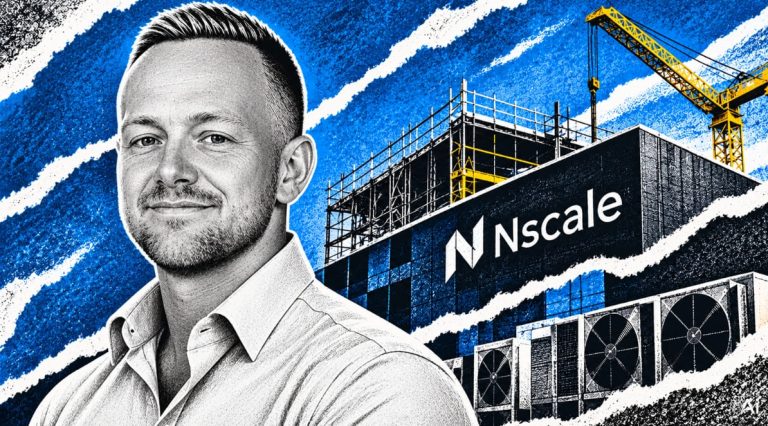

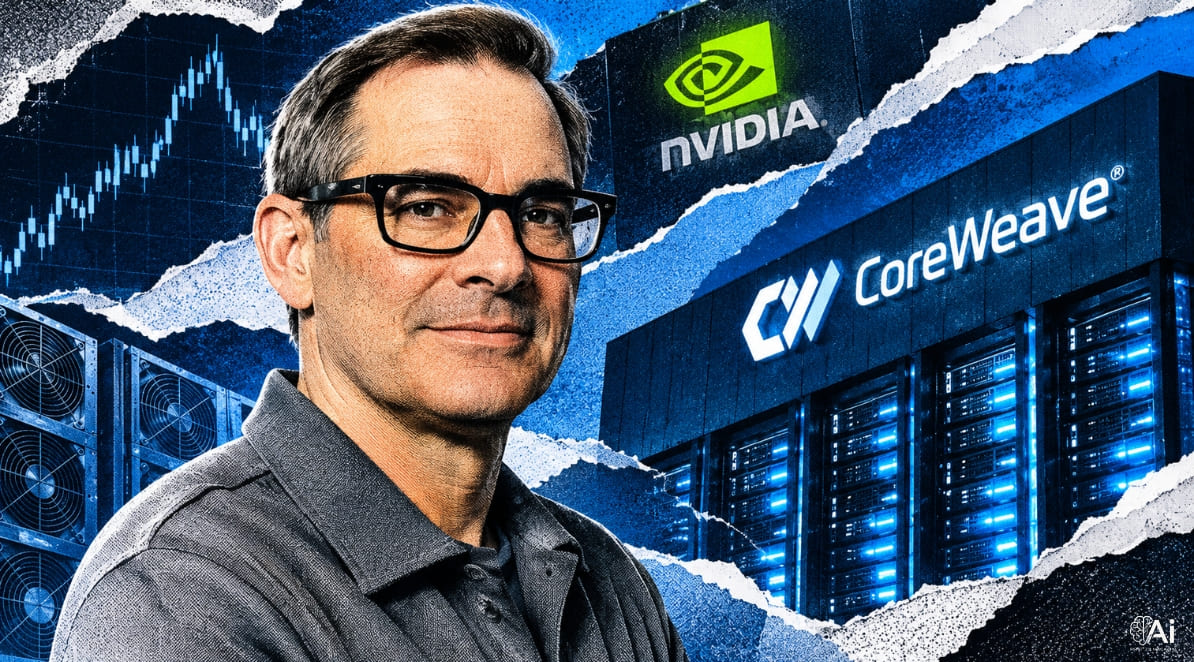
Michael Intrator is the co-founder, chief executive and chairman of CoreWeave, the New Jersey company that rents NVIDIA’s AI chips to Microsoft, OpenAI and Meta. He traded energy markets for two decades before starting it in 2017, and since CoreWeave listed in March 2025 he and entities he controls have sold $975 million of its shares, by our count of his SEC filings.
At a glance
Michael Intrator
Co-founder, CEO and chairman of CoreWeave (Nasdaq: CRWV)
- Career
- Natsource Asset Management (1998 to 2014); CEO of Hudson Ridge Asset Management (to 2018); CoreWeave since 2017
- Education
- BA in political science, Binghamton University; MPA in public finance, Columbia University
- Co-founders
- Brian Venturo, Brannin McBee and Peter Salanki
- Online
- LinkedIn, with about 32,000 followers; no public X posts
For someone who has sold nearly a billion dollars’ worth of CoreWeave stock, Intrator seems fairly relaxed in public. On September 30 at the company’s Fully Connected conference, Hot Ones host Sean Evans interviewed him on stage over hot sauce. Intrator posted about it afterward on LinkedIn and made light of the whole thing.
How Did Michael Intrator Start CoreWeave?
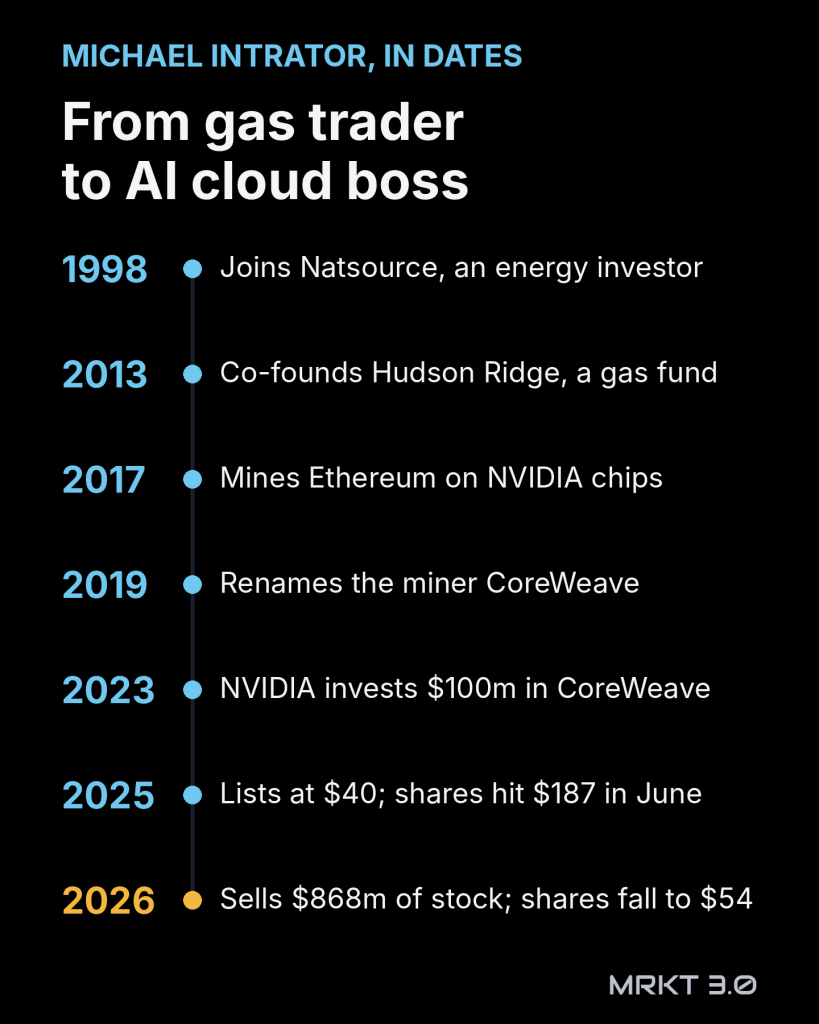
Intrator started CoreWeave by mining Ethereum in 2017 with Brian Venturo, who had worked for him at Hudson Ridge, and Brannin McBee. Before that, Intrator spent 16 years at Natsource Asset Management, where he rose to principal portfolio manager. He then ran Hudson Ridge, a natural gas hedge fund.
The three started with a single GPU on a pool table in a Wall Street office, then moved the rigs to Venturo’s grandfather’s garage in New Jersey. Their company, Atlantic Crypto, bought cheap chips in the 2018 crypto crash. Renamed CoreWeave in 2019, it began renting them out for visual effects and AI training, and it stopped mining in September 2022.
NVIDIA invested $100 million in 2023, and Microsoft agreed to spend potentially billions with CoreWeave, reportedly to make sure OpenAI had enough computing power. In 2024 Microsoft brought in 62% of CoreWeave’s revenue; by mid-2026 its largest customer made up 36%. Intrator rarely dwells on the crypto years. “I don’t spend too much time on that,” he said on the day of the IPO.
How Much CoreWeave Stock Has Michael Intrator Sold?
Intrator has sold around $975 million of CoreWeave stock since the IPO, by our count. We added up all 50 Form 4 filings in which he disclosed a sale. They cover 10.1 million shares sold on 51 trading days between August 27, 2025 and September 30, 2026, at an average of $96 a share.
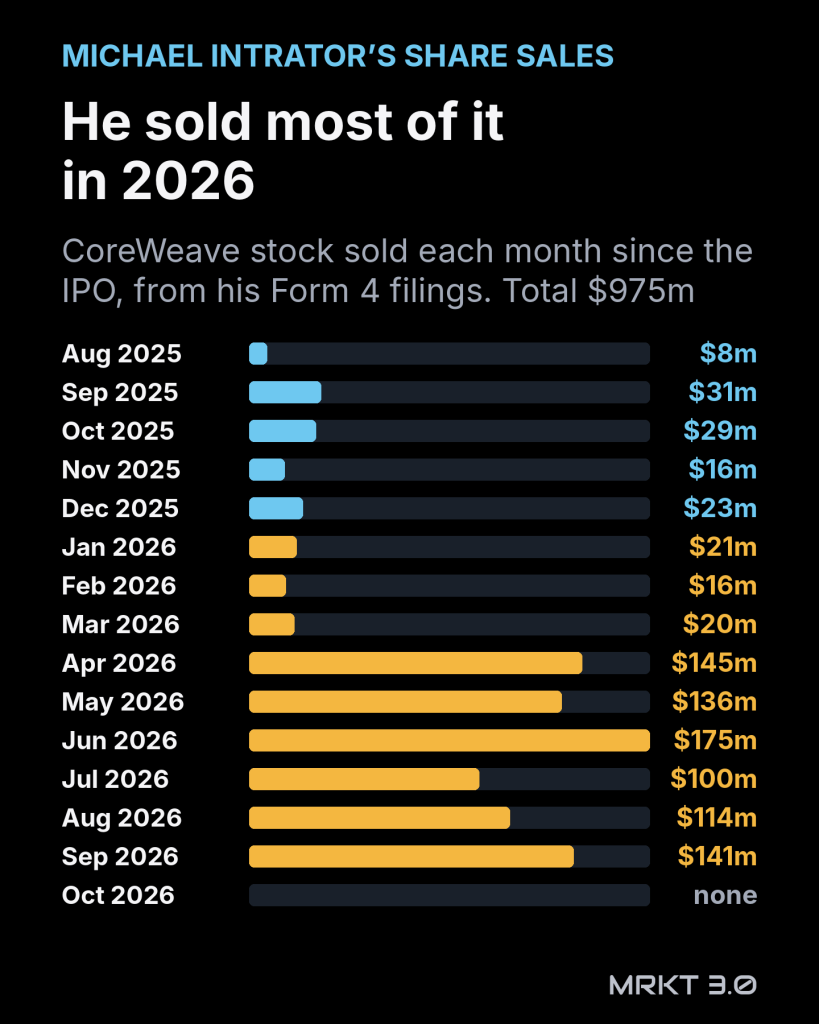
Most of it came this year. A trading plan he adopted on November 20, 2025 started selling in April. It sold $794 million in six months, more than five times as much as his first plan. The filings break the total down like this.
- $935.6 million was sold under two 10b5-1 plans, which let executives fix a selling schedule in advance. He adopted them on May 23 and November 20, 2025.
- $39.4 million paid the tax on shares that vested.
- $615.9 million came from shares in his own name, $348.4 million from Omnadora Capital, an LLC he controls, and $10.7 million from two trusts.
- About $160 million more went in tender offers before the IPO.
His votes still count for more than his shares. Each Class B share carries ten votes, so in April 2026 he held 38.7% of CoreWeave’s votes with about 11% of its shares (our calculation). With Venturo and McBee, the three founders have sold $3.3 billion of stock since the IPO. The selling drew a public rebuke on October 19 from CNBC’s Jim Cramer, who has interviewed Intrator on air.
Here's the issue: Coreweave has no innate defense. There can't be a buyback or a dividend. There could be a debt buyback arbitrage i guess. But no matter what Michael Intrator: CANCEL YOUR SELLING
— Jim Cramer (@jimcramer) October 19, 2026
What Is Michael Intrator’s Net Worth?
Forbes put Intrator’s net worth at $3.4 billion on November, 2026, and ranks him No. 302 on its 2026 list of the 400 richest Americans.
Bloomberg valued him at $11.8 billion in June 2025, when CoreWeave shares peaked. They closed at $53.74 on November 3, 2026, still above the $40 IPO price. His pay is small by comparison, at $3.45 million in 2025. That figure includes $1.89 million that CoreWeave paid for his antitrust filing fees and the tax on them.
Is Michael Intrator a Controversial Figure?
CoreWeave shares fell 15.5% on October 14, 2026, and its 2032 bonds dropped below 80 cents on the dollar. In a memo to staff that surfaced that day, Intrator wrote that at times “the market misunderstands and acts irrationally”. His last sale had come two weeks earlier, on September 30, after $868 million of sales in 2026, most of them under a plan set the previous November.
His biggest deal also failed. Core Scientific’s shareholders voted down his $9 billion all-stock takeover on October 30, 2025. Less than two weeks later CoreWeave cut its revenue forecast, blaming a data-centre developer that was behind schedule. In January 2026 shareholders filed a class action. It claims the company overstated its ability to meet demand and played down the risk of relying on one data-centre supplier. CoreWeave says the claims are without merit.
The debt is the other worry. CoreWeave owed $35.1 billion, plus $16.5 billion of leases, at June 30, 2026, and had a backlog of about $104 billion in signed contracts. In September 2025 the short seller Kerrisdale Capital called it the “poster child of the AI infrastructure bubble”. Elon Musk later predicted a shake-out among neoclouds.
What Does Michael Intrator Say About Debt and the AI Bubble?
Intrator argues the debt is safe because customers have already signed for the capacity. These are his own words.
- On debt (CNBC, April 2026). “Scaling is expensive,” he said, adding that the contracts “pay back all of the debt we’re taking on.”
- On “circular” deals (Big Technology Podcast, January 2026). The idea that NVIDIA’s $300m stake is CoreWeave’s “secret sauce” is “just a ridiculous narrative.”
- On ageing GPUs (same podcast). The worry is being spun up by “a bunch of folks who couldn’t spell GPU two years ago.”
- On labels (Bloomberg Tech, September 2026). “We were the original neocloud,” he said. He now calls CoreWeave an AI cloud.
The term stuck anyway. CoreWeave still tops our neocloud ranking with 1.5GW of power running, and its listing set the pattern for the rivals now heading to market. Our neocloud explainer covers how the model works.
What Does CoreWeave Do in Europe?
CoreWeave says it runs nine European data centres, in the UK, Spain, Sweden, Norway and Denmark. The newest is atNorth’s DEN01 in Copenhagen, where it brought most of its planned 22.5MW online in October 2026. atNorth is the largest of the Nordic operators that rent space to others. CoreWeave has also pledged £2.5 billion for the UK, where its European headquarters is in London. “Europe represents the next frontier for the AI industry,” Intrator said in June 2024.
Author: Akos Szima
See Also:
What Is Nebius? The AI Cloud Now Worth More Than CoreWeave
What Is IREN? The Bitcoin Miner Now Renting AI Chips to Microsoft and NVIDIA
Who Is Anjney Midha? The Anthropic Backer Now Selling AI Compute
How We Checked This:
We read every Form 4 that Intrator filed with the SEC after CoreWeave’s IPO and added up the 50 that report sales, using the weighted average prices in each filing. The totals include sales by Omnadora Capital and two trusts that appear on his filings. They leave out shares CoreWeave withheld for tax and a gift of 1m shares in November 2025. Pre-IPO sales come from TechCrunch’s reading of the prospectus, and net worth is Forbes’s estimate. His LinkedIn profile dates Hudson Ridge from 2011, while CoreWeave’s filings say 2013. Download every sale, with its filing (CSV).
Frequently Asked Questions:
Yes. Forbes put his net worth at $3.7 billion on October 23, 2026, most of it in CoreWeave shares. Bloomberg valued him at $11.8 billion in June 2025, when the stock peaked.
CoreWeave lists four: Michael Intrator (CEO), Brian Venturo (chief strategy officer), Brannin McBee (chief development officer) and Peter Salanki (chief technology officer), who joined in 2019. It began in 2017 as Atlantic Crypto, an Ethereum miner.
He has a BA in political science from Binghamton University and a Master of Public Administration in public finance from Columbia University’s School of International and Public Affairs.
This article is based on SEC filings, company statements and published interviews, and is not investment advice. MRKT 3.0 has no commercial relationship with CoreWeave.